On the verge of knowledge?

13 12 2013

Image

This week I’ve been talking to teenagers about philosophy. Yesterday a boy asked:  what do I get out of it?  Little did he know, but his question was not something I could easily answer. What was he hoping to get out of it? Did he want philosophy to point him in the direction of living a more fulfilling and engaged life, or did he want to know what a qualification in philosophy was worth?

It turned out that he wanted to know whether philosophy was taken seriously as a discipline. Was it equal to studying history or maths or science?  Was it recognised as a proper subject? This is a question that crops up fairly often in philosophy, especially among older students. They want to know that a subject is legitimate before they raise their energy to meet it. They want to know that it will be worth the investment because they are already very busy people. Only this afternoon during a creative thinking session, a sixth former asked with genuine puzzlement and exasperation: “I wonder whether you could tell me why I feel so tired all the time?”

After a quick lifestyle check in which he said he got enough sleep, regularly exercised and drank enough water, he admitted that he is the kind of person who gives life one hundred percent. Whatever he does, he has to give it his all, and that after a while gets exhausting. When I suggested taking half an hour a day to do absolutely nothing except let his mind take a rest from incoming information, he looked doubtful and then thoughtful. He said he might give it a try. I joked that the ultimate challenge now is to do absolutely nothing except give the mind some clear thinking space. In this age of non-stop doing, simple thinking has become the last thing many young people do when they feel overwhelmed and stressed. 

The group wanted to know: if humans are so clever and so successful why haven’t we got to the stage yet when we take time out to think creatively every day? Why have we invented a world of information and forgotten that we need time to get our heads around some of the new stuff that keeps coming at us daily. Why, they wondered, have we created a world in which young people in particular feel under pressure?

‘It’s because we’re greedy and competitive,’ one boy suggested. ‘Is it because we don’t know when to stop?’ another queried. ‘It’s because we have to feel that we’re making progress, and this is the way we’re used to making progress, by new inventions.’ These already overwhelmed boys of sixteen wanted to know whether there might be a limit to our human capacity for novelty and invention. When might it all stop?

The human capacity for invention intrigued the philosopher David Hume (1711-76). He believes that the imagination has a primary role in the way in which we access knowledge. One of Hume’s themes centres on the limits of knowledge. He shares with John Locke (1632-1704) the theory that the mind starts out as tabula rasa, or blank slate, and gains ideas through experience or impressions. For Hume, every idea we have is copied from impressions stored in the mind. We might want to design a fantastic building made from glass or ice, something never before seen, and we do this by combining impressions of materials and techniques previously experienced. Hume’s own example is a golden mountain. We might never have seen one, but we could invent one based on what we already know.

Hume’s theories intrigue because it is still not clear how we can know anything. It is one thing to say that we can create new knowledge from existing impressions based on experience, but does that mean that we can’t ask questions about what we don’t know? Do we have to remain within the boundaries of empirical knowledge? My adult seminar group this week wondered about the limits of knowledge and our chosen question delved into the problem of infinity: is infinity indefinable?

Gordon said that questions about what lies beyond what we know are impossible. We simply can’t make the leap. Our minds need to feel secure. Hume would have agreed. He liked his impressions and ideas neat and tidy and would have had no time for speculative nonsense. Bertrand Russell took a similar line, once claiming that the universe is a ‘brute fact.’ It exists. End of question. Get over it.

There were a few contemplatives among the group for whom this was not enough. If facts and evidence and data are the primary form of knowledge, why do we continue to ask metaphysical questions? If we’ve come to a dead end in terms of our method of gaining knowledge, and Russell thought Hume had pretty much said it all, then why do we feel that there is more to be discovered? Why do we dream and speculate and feel a sense of there being something other than the hard facts? And what do children know?

Steve shared a comment made by his three-year-old grandson. One day when they were out walking his grandson took in the scene around him and then turned to Steve and said: ‘When does it all end?’ What he meant was not that particular day out with his grand-dad, but life itself, in all its swirling glory.

To a three-year-old life is infinitely mysterious. I can remember a similar metaphysical moment with a three-year-old nephew one snowy Christmas on a walk through a village sparkling in the sun after a pub lunch by a log fire. As we crunched up the hill, my nephew looked into an immaculate sky and asked: ‘Belinda, is God real?’ I tried not to patronise him or fob him off with …well some people say…I told him about the philosophical arguments for the existence of God and said that he would one day have to make up his own mind about whether they were true or not. I like to think that I gave him something more to think about.

The age of three is a good starting point for philosophy, perhaps three is the ideal age for wonder. In thinking of how the world appears to a three-year-old, we remember that it is not all obvious and precisely thought-through. There are many things that need to be puzzled over and discussed and understood, many things that seem mystifying. Many impressions that have not yet become ideas.

When a close friend’s three-year-old came to Devon for the first time he was puzzled by the grass verges which were particularly intriguing to a boy who had in his short life known only London streets. He was curious and wanted to know. ‘Belinda, are the pavements under the grass?’  I told him about verges – a strange word now I think of it –  and he recombined his impressions. Hume would have said that he updated his imagination. Later on my friend’s son was able to add another new idea. After a particularly exciting time at the beach, he asked: ‘When are we going to that big canal again?’

Three year olds don’t need reminding to ask questions about life; they do so naturally and spontaneously. In recalling these moments of fresh openness to life’s experience, I think of the older boys today, so initially weary and jaded as they talked about the possibility that we might one day know it all, perhaps we would reach a Humean dead-end, until one of them said that there would always be as many creative ideas as there were people. ‘I guess that’s true,’ another said and their faces shone with wonder for a moment.

It isn’t going to end. There are always more questions, just as long as we remember to keep asking them.



I remember me

4 12 2013

Image

picture: commons.wikimedia.org

Ask someone who he is and he will probably point to his body and say something like: ‘I’m John and I’m tall, of slim build and bright eye, and I have long grey hair. I was brought up in Somerset.’ He might go on to say where he went to school, what he studied at university, and who he married.

Who we are is a question that preoccupied the English philosopher John Locke, who was tall and slim with long grey hair and went to Westminster School and then on to Oxford University.  Locke who qualified in medicine and who had many friends and no wife was puzzled about the problem of human identity.

In his Enquiry Concerning Human Understanding Locke considers the problem of how consciousness relates to identity with some delightful examples that range from a remarkable parrot that can speak Brazilian to a philosophical fairy tale about a prince who exchanges places with a cobbler. Locke also muses on the effects of cannibalism on the continuity of the soul and the attributes of his little finger.

Eccentric as this may sound, Locke was known as a common-sense philosopher and his wide-ranging interests and philosophical work covered almost every area of human thought from politics to freedom, education, human rights and property. His views were hugely influential and informed the writing of the American Constitution.

His thinking on identity follows on from his arguments on how ideas are formed from experience. Locke claim is that we are born knowing nothing, our minds are tabula rasa, blank slates upon which we chalk the marks of experience. There is no such thing as innate knowledge. We are all born equally ignorant.

For Locke, human and animal minds have a starting point of existence, and that remains fixed as part of the identity of that specific mind. Aristotle was born in 384BC and that means that his mind existed then and only during the period that he lived. His mind can’t transmigrate to the 21st century. If you happen bump into someone tomorrow in the Post Office who claims to be Aristotle, you probably aren’t going to be inviting him home to discuss human happiness. Bodies are another matter, though. For we know that bodies do change, and some bodies become unrecognisably altered.

Locke’s enquiry poses many questions. He wonders about oak trees and asks whether an acorn that develops into a great tree remains the same tree. He also muses on horses and considers whether a playful young colt that grows into a mature horse is the same animal even though he now looks completely different. The oak tree is more than its roots, branches and leaves. For Locke, its identity consists of the rather wonderful phrase ‘the vegetable life.’ An acorn, a sapling and an old tree have all partaken of the same life. Young and old are entrained in this life.

My horses now have a completely different shape to when they were born, at present  massive grass bellies, and the particles and cells of their bodies have all renewed themselves many times over. Similarly as the oak trees in their field, they have partaken of the same life; the young colts and the mature horses are on a continuum; young and old have lived the same animal life. When I look at them I see them as they are, but I also remember them as young colts. The arc of their lives is knowable only to someone who has experienced them through time.

When it comes to humans, though, Locke’s ideas get a bit bizarre. He argues that when we say ‘man’ we really just mean human-shaped container. If that human shape had no more reason than a cat or a parrot we would still think of it as a man. A reasoning super-intelligent parrot who spoke not only English, but French, Dutch and Portuguese would still be thought of as a parrot and not a man, however uncanny its powers of speech.

“It is not the idea of a thinking or rational being alone that makes the idea of a man in most people’s sense, but of a body so and so shaped, joined to it; and if that be the idea of a man, the same successive body not shifted all at once must, as well as the same immaterial spirit, go to the making of the same man.”

For Locke, man and person are two entirely different things. Locke’s definition of a person is a ‘thinking intelligent being that has reason and reflection and can consider itself as itself, the same thinking thing in different times and places; which it does only by that consciousness which is inseparable from thinking…’

Locke goes on to say that ‘when we see, hear, smell, taste, feel, meditate, or will anything, we know that we do so.’

In other words, we are our present sensations and our perceptions, and this is what Locke calls the ‘self.’ There is no inner ‘us.’ We cannot be conscious of what we are, we can only be conscious of what we are thinking about, or feeling, or experiencing.

Locke argues that what makes us the same person is not just our body, but consciousness. We need to be aware of our own experiences in order to form a sense of self. Our memories of our childhood form part of our identity, but what we can’t remember is not part of us. The blank parts of our unremembered lives remain inaccessible and don’t form part of who we are.

In order to demonstrate that identity is rooted in consciousness, Locke describes a thought experiment in which he imagines the thoughts, memories and life experience of a prince entering the body of a cobbler. This cobbler would have a prince’s memories, hopes dreams, fears, all of his recalled experiences. Wouldn’t that cobbler then become the prince? Similarly, a prince wakes up with the memories and consciousness of a cobbler, and he feels that he is the cobbler. The fact that he still looks, talks and walks like a prince does not matter. If he has the memories of the cobbler, then he is the cobbler. If the cobbler had committed a crime in his original embodiment and remained unpunished then it is the prince who will go to prison. As Steve pointed out during last night’s seminar, if you are inhabited by someone else then you are no longer you.

Our enquiry touched on beliefs and values as markers of identity. As our beliefs and values can change, it seems that so too can our identity. Most adult people are not the same ‘person’ as they were at six. When I look at a photograph of myself as a twelve-year-old, I’m looking at almost another version of me. What links me to that younger version is a sense of having moved and grown on, in oak tree terms, a branching out. As we grow older we habitually distance ourselves from childhood. As Gordon memorably put it: “when I look back on my life, I remember me.”

This raises the intriguing question: who is the person that we remember? How can we remember ourselves when it is us doing the remembering? And if memory is such a strong indicator of consciousness and identity, as Locke held, then people who suffer from false memory syndrome are condemned to a false consciousness. Locke’s theory of identity led him to conclude that people could not be punished for crimes they could not remember committing. We wondered last night how it would be possible to tell whether someone was lying or not about what they remembered and the implications of this in the law courts. Locke does not consider that forgetting is also part of human identity. Indeed it could be argued that what we forget is perhaps as important to making us who we are as what we remember.

Image

my horses enjoying the vegetable life

more on memory and forgetting here:

http://iai.tv/video/memory-and-forgetting


Nasty nature

19 11 2013

Image

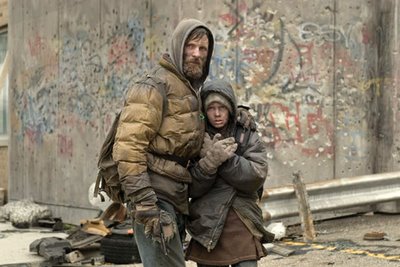
scene from film adaptation of Cormac McCarthy’s novel The Road: teaser-trailer.com

Thomas Hobbes would not have been surprised at the revelations this week that former co-op bank chairman Paul Flowers, now known forever as the ‘Crystal Methodist,’ took drugs to ease the pressure of his demanding job.

The influential political philosopher Hobbes, who lived through the whole of the English Civil War, recognised that life is pretty lonely at the top and that most people are driven by fear. Fear had been with Hobbes from birth when on hearing that the Spanish Armada was approaching, his mother went into labour early. ‘Fear and I were born twins,’ Hobbes later said.

In complete opposition to Epicurus who argued that death is nothing and therefore something that we really need not be afraid of, Hobbes believed that fear of death is a very real anxiety for most people. Most people would trade their freedom and security in exchange for protection from violent death. Police states and military dictatorships are preferable to what Hobbes called a ‘state of nature’ in which humans turn feral. According to Hobbes, humans left to their own devices could not help but take advantage of each other and would end up tearing each other to pieces.

Cormac McCarthy’s magnificent novel The Road, set in a post-apocalyptic America, takes a powerful and poetic look at what happens to people when society becomes extinct, and he comes to similar conclusions to Hobbes.

“He walked out in the gray light and stood and he saw for a brief moment the absolute truth of the world. The cold relentless circling of the intestate earth. Darkness implacable. The blind dogs of the sun in their running. The crushing black vacuum of the universe.” The Road.

As McCarthy observes, few humans will show mercy to others when in a state of intense deprivation and fear. We have plenty of examples of crimes of human evil from the holocaust and world wars that fully support Hobbes. We also have plenty of examples of humans helping themselves from the world of business banking. When a natural disaster breaks, such as in the Philippines, one of the first priorities is to restore law and order so that scarce resources can be shared out fairly. By Hobbes’ account we are incapable of being fair on our own. We need systems with people in uniform telling us what to do.

Hobbes wrote as a systems thinker, a top-down man, who believed that only way of curbing man’s natural uncontrollable desires to loot, to cheat, to lie, to steal and help himself is to put in charge a dictator who would rule with an iron fist.

Our discussion tonight found much to agree with in Hobbes. Why is it that people cannot get along? Why is it that Protestants and Catholics continue their civil wars through their football teams? Why is it that in today’s democratic Britain we have never had a period of social harmony that has not been interrupted by gang violence or street riots? People will always have splintered beliefs, argued one member of the group. Even if we dissolved all religion, people would still fall out with each other.

So maybe Hobbes is right: it really is ‘a war of all against all,’ but several among us tonight felt that mankind was certainly not lost. Even though we might recognise the terrible landscape painted by McCarthy and other writers who explore the theme of dystopia, we are making progress as a human race.

We’ve certainly moved on from the seventeenth century when Hobbes was writing his political treatise. Hobbes believed that humans behaved like animated machines. It was our physical makeup that made us unruly and driven by our own desires. We are not right or wrong in a state of nature, we are in a sense innocent of society’s civilising influence. Morality is only possible after we have created a structure for it.

This narrow view of mankind, still influential in some areas of education and psychology, limits us. Hobbes did not consider the creative aspect of mankind; the idea that we hold the solution to the problems we have created would have been alien to him. For Hobbes, too much freedom led to anarchy and chaos. For less rigid philosophers, including Aristotle, who Hobbes blamed for spreading the idea that humans could choose how to live virtuously, a free-thinking rational way of life is essential for growth, for experimentation, for innovation. Without reasoned free thinking, how can we ever learn to advance on the old worn-out ideas that no longer apply? We all know plenty of institutions that cling to a Hobbesian world-view that doing what we’ve always done keeps us safe and protected, and we all know how stultifying and often dehumanising it is to spend even a short time in such places.

The chance to flourish and grow, as Aristotle argued, is what gives people a sense of purpose and meaning in life. Deprived of the opportunity to make something of our lives, to find something for which we can live or die, we are indeed on the road to chaos.

https://www.facebook.com/groups/Thinkingthroughphilosophy/


The Epicurean Life

13 11 2013

Image

“It is impossible to live a pleasant life without living wisely and honourably and justly, and it is impossible to live wisely and honourably and justly without living pleasantly.”

Mention the name Epicurus and most people immediately think of a well-known brand of fancy preserves and pickles. To most people an ‘Epicurean’ would be someone who indulged in a life of fine wining and dining, someone who preferred to shop at Waitrose rather than Asda, who chose cashmere over acrylic, and whose idea of heaven was a long Sunday morning lie-in reading Nigel Slater or Nigella Lawson: a bit of a foodie hedonist, right?

But were Epicurus (341-270 BC) still alive today, he would certainly not recognise himself from the above description. All right, he might have enjoyed reading Nigel Slater and looking forward to some exquisitely tasty meals, but he wouldn’t be interested in gorging himself or overdoing the wine: Epicurus the philosopher of ancient Greece firmly believed in moderation and living the simple life. He has often been misunderstood mostly because of his key belief that seeking pleasure is the best way to become happy.

For Epicurus there was nothing more pleasant than spending time in a beautiful garden in deep conversation on life’s meaning with his closest friends and followers. In this garden they drank water rather than wine and were kind to each other rather than competitive. Indeed the garden at Epicurus’ home in Athens where he taught his ideas became well-known and established as the school of Epicurean philosophy, much in the same way that the Academy was renowned as the school of Platonic thinking and the Lyceum, the school of Aristotle’s ideas.

For Epicurus the lessons of the garden were a form of practical philosophy. Gathering together people who were interested in ideas of life and death was a way of helping people to work out what they really thought and to overcome their fears and anxieties. Following Socrates, Epicurus recognised that philosophy is most useful when it can be directly applied to ordinary life. Philosophy can help to shed light on puzzling problems and ethical dilemmas and offer clarity. This Epicurean way of philosophy was incredibly popular during his time and is still one of the best models for doing philosophy rather than learning about philosophy.

Critics of Epicurus portray him as an atheist and hedonist, but his philosophy was more nuanced than mere self-centred pleasure-seeking. He believed that some desires were natural and necessary, such as the desire for food, shelter and company, and that we should pursue those desires.

In tonight’s seminar discussion one of the group mentioned that in the aftermath of the typhoon some Filipinos were looting for food and that was something that we considered entirely natural and understandable given the scale of the disaster. Looting for luxury or non-essential goods, however, was not considered natural or understandable, and parallels were drawn with the disaster in New Orleans when some people caught up in that situation used the break down in social structure to their own advantage by committing crime. The question that emerged was: is justice natural? Our enquiry seemed to follow the line of thinking that justice was cultural, thus agreeing with Epicurus who claimed that justice was a social agreement not to cause harm or be harmed. He viewed justice as a form of community policing. People have to first agree on what is acceptable or not acceptable and this code of conduct is then enforced in order to protect the community. This seems entirely reasonable. Most people want to live in peace within their communities and justice is one way to ensure that people know where they stand. In peaceful communities people have no need to loot or form vigilante groups. Chaos and desperation change the rules of justice.

As we have seen in situations of chaos some people cannot resist the temptations of corruption. Is this because they lack natural justice, or is it because they know they can get away with ignoring justice in situations of extremes? Epicurus might have argued that people don’t automatically turn bad when there are no community police around to stop them misbehaving. Instead given a breakdown in any society’s structure, people will see what they can get away with. We can all understand this very human impulse. We can all act impetuously. It’s what makes us sometimes jump red lights or neglect to tell a cashier that she has failed to charge us for the item now in the bottom of our shopping bag. We bend the rules of justice to make make them fit our new circumstances, and we even have a word for it rooted in justice itself: we call it justification.

Epicurus taught that we can learn to understand our desires and so learn how to appreciate all that we have. Once we understand that what we already have can bring us great pleasure then we will be less inclined to want more or feel dissatisfied. If we read the search for pleasure as the search for well-being then these very ancient ideas make sense today. In this reading, Epicurus is a very modern-minded philosopher whose ideas are certainly compatible with contemporary Buddhist thinking about suffering and craving and living mindfully. In terms of offering us food for thought into current ethical living, Epicurus has not yet passed his sell-by date.


Friends for life

20 09 2013

Image

Most people would agree that friendship is necessary for a good life. I can’t imagine living my life without my friends and some of my most precious friendships are with people I have known for forty years. Like most people I sometimes take my friends for granted and forget to call them for weeks at a time, and because they are my friends, they never blame me for my absences or my neglect. In the same way, I’d never dream of taking them to task for not calling me more often. With my close friends, I can assume that our friendship is worth preserving because there is so much shared history and humour.

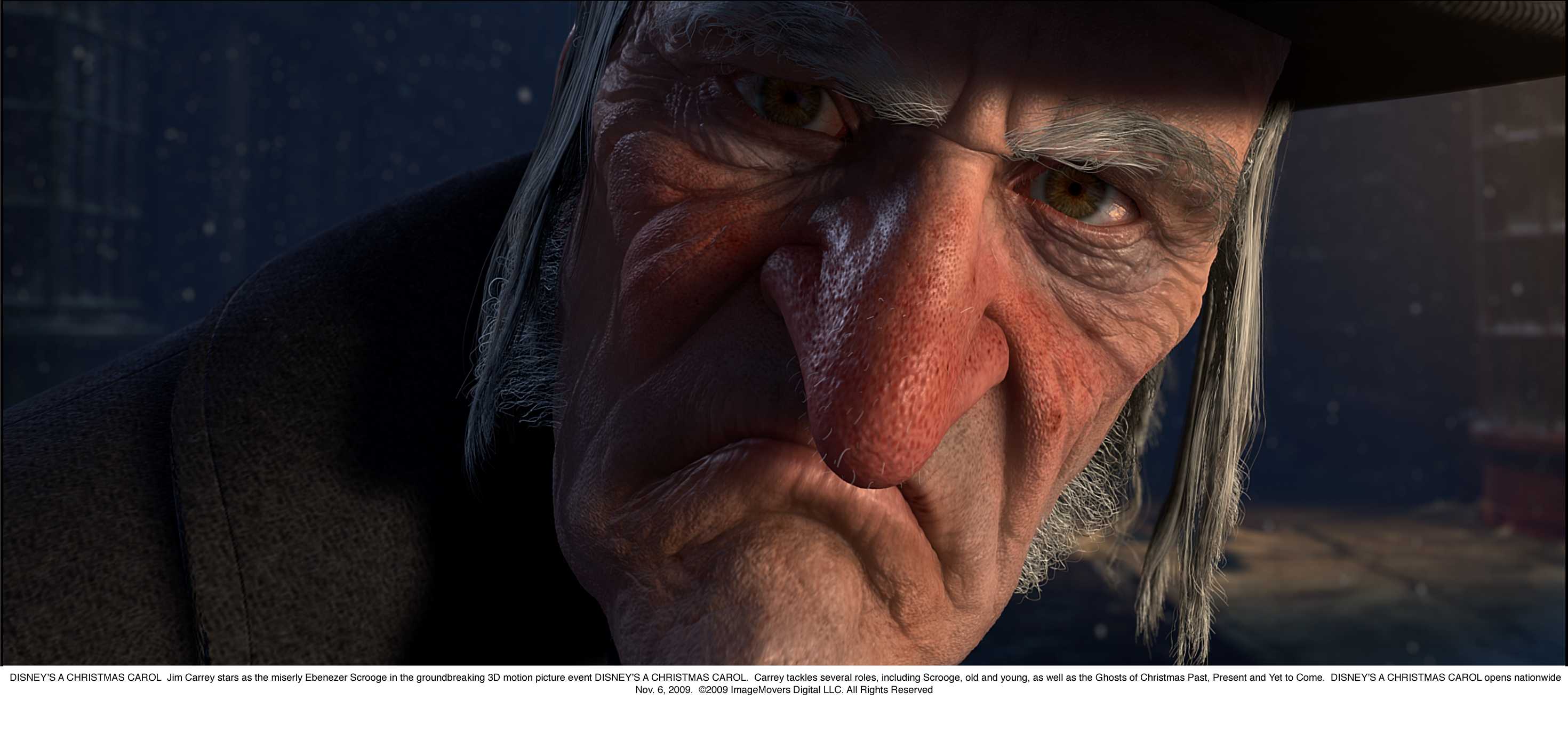
Thinking about Aristotle’s ideas on friendship has made me wonder, though, about the qualities within friendship that I value most. For Aristotle friends are necessary at all times of life: to show us how to appreciate the good times and to support us when we fall on hard times. Dickens made a similar point in creating the character of Ebenezer Scrooge, a man too miserly for friends, who has to learn about benevolence from the ghosts of the past, present and future. The message of A Christmas Carol is that no matter how much money you have, without friends or people to care about, life is impoverished and not worth living.

Written more than three hundred years before Christ the Nicomachean Ethics, Aristotle’s series of lecture notes, develops this same theme. The Ethics develops the idea that friendship is essential in the pursuit of happiness or a flourishing life “for no one would choose to live without friends even if he had all the other goods.”

For Aristotle, friendship goes beyond the functional. We don’t simply need friends to avoid the abyss of loneliness. “Friendship is not only necessary, but also fine. For we praise lovers of friends and having many friends seems to be a fine thing.”

Still, he says, there are many disputed points about friendship itself. For some people being friends means seeking out people who are similar to them. Hence the saying “Birds of a feather stay together.” On the other hand it is said that similar people are so alike that they are bound to fall out, “like the proverbial potters quarrelling with each other.”

In attempting to unravel these seeming contradictions, Aristotle wonders whether friendship is possible among all sorts of people, or whether ‘vicious’ or unpleasant people can be friends. He also wants to know if there is one species of friendship, or more.

He begins with a general account of friendship. The object of friendship is to find what is lovable in a person. For Aristotle, not everything is loved, but only what is lovable, and this is either good or pleasant or useful. He goes on to note that what is useful is the source of some good so that what is good and what is pleasant are lovable as ends.

This raises the question: “Do people love what is good, or what is good for them?”

In other words, do we seek out friends just because they will make us feel good? If so, doesn’t this mean that all friendship is a reflection of our own egoistic needs and desires? Do we want to be friends with people who will make us shine?

Aristotle’s way of thinking is that friends are necessary in helping us to become better people. With certain friends I feel that I can be my ‘best self,’ not my most arrogant self, but my true self. I’ve just, as it happens, finished a long phone call with one such friend who always has me reaching for my note book as we speak. She makes me think in ways that make my brain sparkle. Our friendship creates a space where we discuss (often quite mad) ideas, and we are entirely comfortable with this. We ‘get’ each other and we both share a sense of the ridiculous. At the end of the phone call she had me hooting with laughter as she told the story of a long-ago marriage proposal from a butcher.  The italics do not do justice to the outrage and incredulity in her tone, for my friend is a vegetarian and devout friend to animals.  I’m writing the short story in my head for her, and this helps to explain what I think Aristotle means when he tells us that: Complete friendship is the friendship of good people.”

For Aristotle a complete friendship is only possible with someone who is similar in ‘virtue,’ someone who holds similar principles, beliefs and values to our own. I’d have to add humour to that list to make it complete. Still, it makes friendship a matter of morality.

Now those who wish goods to their friend for the friend’s own sake are friends most of all; for they have this attitude because of the friend himself, not coincidentally. Hence these people’s friendship lasts as long as they are good; and virtue is enduring.”

The aim of friendship, then, is to strengthen the higher qualities in people. For the Greeks friendship was of primary importance for the functioning of a healthy society. People could practise noble values through reciprocated acts of generosity and loving and concern for others. If enough people do this then society becomes less selfish as a result.

Aristotle admits, though, that such mutual friendships are rare, since people who are concerned with higher values are few. Not everyone wants to live a fully aware life. Most people would rather just spend a pleasant time hanging out with their friends without over concerning themselves with their moral well-being. We might say that this type of principled friendship is impossible now that we have so many other distractions such as the internet and the demands of our families and jobs.

Aristotle recognises that friendships change over time.  Friendships formed out of utility can be easily dissolved and Aristotle says we shouldn’t worry about this.

“There is nothing absurd in dissolving the friendship whenever they are no longer pleasant or useful. For they were friends of pleasure or utility and if these give out, it is reasonable not to love.”

Friendship which matters most is friendship that helps us to understand ourselves. Aristotle is clear that we must be good to ourselves before we can be good to another person. If we are good to ourselves, we wouldn’t wish to be anyone else even if that other person had every good going for him. Aristotle claims that a good person “practically never regrets what he has done. Every action is useful feedback. This strikes me as a pretty modern idea as does his conclusion that friendship is the highest form of benevolence. If benevolence is an expression of our highest self, we are complete when we give our best efforts to others.

Nicomachean Ethics, translated by Terence Irwin (Hackett 1985)


Failing better

4 09 2013

EVER TRIED.
EVER FAILED.
NO MATTER.
TRY AGAIN.
FAIL AGAIN.
FAIL BETTER.

Samuel Beckett (1906-1989)


The start of a new school year always poses questions about success or failure. For many students, dreams and hopes often lie somewhere between A and B. Try telling a student who didn’t get the grades she hoped for that she didn’t ‘fail’ and she will probably bite your head off.

I think we need a new definition of failure. Samuel Beckett’s idea of failing again and again until we get better at whatever we are trying for is a useful place to start. Like so many writers I remember most the commissions I didn’t get, the staff positions I was overlooked for, the articles that didn’t sell, the novels that remained unfinished, the stories that didn’t quite make it, the terrible poems and the over ambitious film projects.

I have perfect recall of all my ‘failures.’ I could write a great book. I’d call it: Spectacular. It would be an account of all the things I tried that fell flat on their face, of all the things I tried that seemed like great ideas at the time.

Beckett reminds us that we can only get better at failing. I heard yesterday about a girl who has sat her GCSE English exam eleven times. The government has said that students who fail to get English and Maths will have to carry on sitting the exams until they pass at grade C. Some students are going to be sitting their exams more than eleven times; they will have to keep on failing until they pass.

No doubt this is a horrifying prospect for many parents and teachers of students who truly struggle with exams. To force a young person to fail and fail again seems cruel. We are right to want to protect young people from feeling worthless, but saving them from failure is not going to help them succeed.

Beckett’s definition of failure asks us to reconsider failure as possibly something positive. Say the word failure aloud again and again, and inevitably the flabby ‘f’ will depress all the air and energy from your body. The words failure and deflate feel the same in the mouth. Failure equals a slump. Failure is heaviness in defeat.

But whenever I read Beckett’s words I feel a lift, a racing feeling, a wanting to get back to where I left off, so that I can try again, do something different.

And that really is the key to understanding failure. When we fail, we are given an opportunity to do things another way, put a new spin on them, rip them up and start all over again. Looked at this way, failure is positively invigorating.

The trouble is that so many people (and I’ve been there) think that failure is the ‘end.’ It is the sum total of all we amount to. This is a form of zero thinking. It usually runs something like this: this is the best I can do, and obviously this isn’t good enough, therefore I’m a useless human being.  I can bet that girl who took her English exam eleven times wasn’t thinking about failing better each time she went to the exam hall. I bet she was running through the usual script of being useless at English.

If we take the deflation and defeat out of failure by instead thinking of it as a form of reaching then it can help us to stretch that much further. We might get within fingertip distance one time, but just knowing that we nearly got there, we nearly touched it, can push us on to the next level of failure. That is failing better. 


An end to suffering

29 08 2013

 Image

Picture: http://www.rspb.org.uk

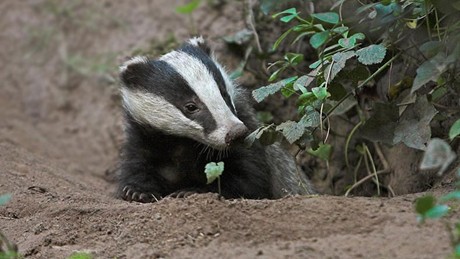
Much of the comment surrounding the arguments for the badger cull which began in Somerset this week has focused on the reasons for delaying the cull no longer. Farming Minister David Heath adopted the ‘regrettable but necessary’ tone that so often accompanies any announcement of acts that the public will find shocking. The prevailing view of the British government is that we wouldn’t kill badgers unless we absolutely had run out of options. We understand that you the public are upset about this, but really we just want a safe, efficient and humane solution that meets our targets. I’m sure that I’m not alone in finding these words of Heath’s chilling.

My question is this: how can mass slaughter ever be humane?  When we as a species decide to send marksmen out into the woods at night specifically to target another species, we lose our humanity.

Those who understand compassion understand the harm in the action. It is always unacceptable to kill one species for the sake of another. Arguments which suggest otherwise presume that species exist on a sliding scale of importance. Those who hold this assumption believe mistakenly that badgers have less value; they are subordinate to cattle raised by farmers and therefore they can be regrettably sacrificed.

The issue for the farming minister is not one of value for the species that live in the British countryside. The place for badgers has already been decided. They are dispensable. It is livelihoods that we are protecting, the farming minster’s emotive tone implied. We are talking only a few thousand badgers in comparison to the economic disaster running into millions for farmers whose herds are being wiped out by tuberculosis. Of course, given a sum like this, the badgers will lose.

The protest against the cull is not about the economy. The demonstrators can understand the farmers’ point of view and have sympathy for their plight. We are all affected by economic recession and can relate to hardship within our own species. We have all been there. In essence, the protest is about what one species can stomach doing to another. The protestors are demonstrating on behalf of the silent badgers, however, they are also demonstrating on behalf of all reasonable humans who will not tolerate tyranny against another species.

As human animals we have responsibilities towards the other animals in the biosphere -we are the leaders of this planet – and how we conduct ourselves towards the other animals marks us out as beings of higher consciousness. Our actions make us worthy leaders or managers. The cull of badgers diminishes our humanity precisely because we have taken the option of violence when we might have chosen further enquiry or investigation; when we might have chosen to ask deeper questions about why the cull is so distasteful to so many ‘ordinary’ people. When we might have paused to really understand what is going on with our farms that are so stricken by disease.

As a child I once came across a badger that had leapt across a rifle range and somehow had become impaled on a metal spike. Its bloated, fly-blown corpse haunted my imagination and in recalling the image I can still smell the rotting stink of death. I found it at a time that badgers were being gassed from their underground setts, and I now wonder whether this badger had been spiked as some sort of macabre trophy. This is not as fanciful as it sounds. I have listened to people talk of their ‘hate’ for badgers and it is part of Devon lore that farmers will aim straight for them when they meet them at  night in the headlights of their four-wheel drives.

It is easier to kill something when you ‘hate’ it, or consider it to be ‘vermin,’ as the Nazis constructing the gas chambers of Poland well understood as they began their systematic extermination of Europe’s Jewish population. All destruction begins in hate and misunderstanding. All justification begins with considering the ‘target’ a lesser being.

Extremist animal rights activists who plant bombs to draw attention to the cause do not understand the arguments against suffering either. Animals share the world with us and always have. They have a voiceless place in our world, and that makes them vulnerable to exploitation by those who wish to subdue them altogether. We are rightly outraged when our ‘fellow’ animals suffer because our animals belong to our way of living. We cannot live without them; they are not separate to us. It is the politicians and factory farmers and laboratory directors that have to separate animals in order to justify experimenting on them or poisoning them when they become inconvenient. Separation is always essential in oppression as we have seen through a world history that has made slaves of people of different skin colours and races and religions.

The protestors recognise something deeply unsettling that has not been at the forefront of the debate about badgers. They recognise that being hunted down and killed at night is horrifying to any species. All animals have a deeply primitive fear of being murdered in their homes at night.

It is for this recognition that people are prepared to leave their comfortable living rooms; their children; their cello lessons and carry candles into the night for creatures who have no idea that they are about to be slaughtered in their thousands.

The farming minster claimed that a single badger sett can be home to a hundred or more badgers, as if the sheer numbers of the animals living in such close proximity to one another justified the army of marksmen that surely will be needed to carry out the deed. I wonder if the South West has enough gunmen prepared to do the job, and I wonder also how these gunmen will be able to sleep afterwards.

Those who speak of badgers as disease carriers that need to be exterminated for the greater good don’t fully understand that what’s at stake here is not simply eradication of tuberculosis infection in cattle, but eradication of a much deeper and more compassionate way of being.

The badger protest is a sign that people are prepared to take an ethical stand on cruelty, and that can only be healthy for all of us.


Last rights

26 07 2013

Image

We are living in a social age. Never before have we had so many opportunities to connect with others. Daily through an ever-increasing range of media people enjoy making links. Even something as inconsequential as ticking a ‘like’ box is a show of approval, a tiny endorsement. A smiley face at the end of a directive email can act as a small encouraging cheer to help to brighten the trawl through the imperative inbox.

We are good at the social niceties. The sparkle dust of social media can be sprinkled around quite liberally, and it makes us feel as if we are in touch with each other. Social media taps into our innate need for connectivity, and simultaneously gets us off the hook of really taking the time and trouble to actually be with someone.

I’m not attacking social media. Blogs are a wonderful way of reaching out to people around the world, and I feel a thrill each time I discover a new reader in India or Iceland. Social media is part of the new world we have created, and it is going to take a while before we really understand the best ways to use it. For now, it still feels to me a little like a delightful new toy that we are slightly obsessed with – the old favourites: hand-written letters filled with news; calling each other for hours on the phone; long lunches that become supper, maybe they will make a comeback once we’ve had our digital fill.

This week as preparation for a series of social philosophy seminars I’ve been reading Social Intelligence by Daniel Goleman, the follow up book to Emotional Intelligence. As is often the case with books that make me think differently, I’ve noticed its central theme cropping up everywhere.

According to Goleman’s research, ‘neuroscience has discovered that our brain’s very design makes it sociable, inexorably drawn into an intimate brain-to-brain linkup whenever we engage with another person. That neural bridge lets us affect the brain – and so the body – of everyone we interact with, just as they do us.’

In other words: we are always affected by other people, for good and for bad. Intuitively we know this. There are people who nourish us just with their presence, and people who bring on an anxious knot in the pit of our stomach. There are conversations that leave us feeling enlivened and valued and those that bring us down and leave us feeling worthless. There are touches that help us to soften and touches that cause us to bristle.

It is clear that we know how to be sociable- we can’t help it, being sociable is a large part of what makes us human – what matters more, though, is an attention to the quality of our social interactions. Of course this has wide implications, especially when it comes to caring for each other. It is not enough to build hospitals and fill them with patients and care staff. It is not enough to design care pathways, as the case in Liverpool has shown. Staff won’t care about their patients unless they feel a connection with them. If patients are presented to staff as out-of-date commodities on the conveyor belt of life they will be treated without respect, denied basic needs such as a sip of water to moisten parched mouths or fruit to take away the gnawing hunger pains. One man spoke of his father, a victim of such ‘care’ as looking like ‘someone out of a concentration camp.’

The question, as I see it, is not how can we get staff that look after the dying to care more, but how can we get them to connect with the other human beings around them? There should be daily reminders in all care homes that the most important thing you can give to someone is not your rushed efficiency, but your time and your attention, not your detachment, but your engagement.

Poignantly, the other evening I was given a lesson in taking the time to care by a group of horses. As intensely social animals, horses develop strong bonds with each other and help each other out. During these hot days my two horses will stand nose to tail, flicking flies from each other’s faces, or one will position himself so as to shade the other. They will eat from the same feed bowl and share a stable. In the paddock next to us is an ancient horse of forty or more, who has bonded with them, and comes into graze with them sometimes.

It is rare for horses to reach forty and the thin old horse is at the end of his life. He is half blind and deaf and unsteady on his legs. Some days when he gets down on the ground to roll, he groans deeply, and his head droops between his splayed legs. More than once I have stopped whatever I’ve been doing, convinced that I’m about to witness his last moments.

The old horse has appreciated the social time with his new young friends and when he returns to his paddock, he is more rested and a wonderful sense of peace passes through the whole herd. The other evening one of my horses spent a good forty minutes gently grooming the old horse, nuzzling and licking his poor old ribs with such tenderness it brought tears to my eyes. The reverence shown to that old horse was joyful to watch. When he returned to his paddock, he felt so light he was almost weightless. Instead of his usual deep groans, he gave a long relieved sigh.

If it is so natural for other social species to care for their elderly, why I wonder is it so difficult for us?


Nietzsche and the scarecrow

7 07 2013

Image

Nietzsche has been much on my mind this week, specifically his call for a revaluation of our values. The old system of good and evil, Nietzsche declares, is outdated and what we need is a new way forward so that we can rise to noble values, such as courage, feelings of fullness and ‘overflowing power.’

If Nietzsche were alive today he would be a leader in the new enterprise culture. His originality of thought, his provocation, his challenge never to accept the status quo, belong to the current age of uncertainty. In order to thrive in a world where there are no jobs for life, we need to be bold and we need to be innovative. We need to move beyond comparison and resentment of those of higher status and into a different sort of pride that allows us to be generous. In this new Nietzsche-inspired moral landscape, self-deprecation causes confusion. Instead of putting ourselves down, Nietzsche would argue, what we must do is to be honest and to share our best creative efforts.

Nietzsche’s aim for humanity was a form of ‘self-overcoming.’ According to his assessment, discrimination between the rulers and the ruled had created a master and slave mentality that in turn led to a morality based on resentment of the strong by those in subordinate positions. This unhealthy power structure still dominates many institutions today. I gave up taking breaks in staff room because of it. Griping is part of the curriculum in every school I’ve worked in.  If Nietzsche were still around to see what we have done with our magnificent education, I have no doubt that he would be appalled. So many brilliant minds creating so many meaningless work sheets and teacher tasks.

Of course, not all of what we have done to education is wrong. Many young people thrive under our current system, but few who work in education truly believe that we have the best-designed schools and programmes of learning. Anyone who has ever worked in a school could come up with at least one idea of how things might be done either more thoughtfully or imaginatively. Schools still tend to value efficiency over innovation. And sadly schools still tend to promote what Nietzsche called the ‘herd’ mentality. Speaking out, standing up for what you believe in, taking risks, is still seen in many educational establishments as, well, just too risky.

Nevertheless much of Nietzsche’s philosophy just does not work for me. His attacks on the philosophers who came before him, notably ‘old Kant,’ are juvenile and much of his writing is clever-showy and attention-seeking. If he had resisted his own resentments and his tendency to hurl grenades at previous moral thinking, he would be worth listening to. Much of what he says is a rant, interesting and exuberant, but still a rant. In style, Kant cannot be compared; he is no brilliant essayist, but in his series of critiques he does the hard spade work of thinking through morality and leaves us with far, far more than we need: an entire ethical system based on treating each other with respect.

This leads me to my photo of the scarecrow. This afternoon I stopped my car on a narrow lane to take the shot of my first encounter in years with a real scarecrow, by which I mean one put into a field to actually scare things rather than one featuring in a festival. Lifting my camera, a white van came storming up the lane straight into my view. I went over and politely explained that I wanted to take a photograph and I didn’t want the van in the shot.

The white van driver’s response was: ‘And I don’t want to stop.’

I had a choice. I could have switched off the camera and got back into my car. There was no passing space and so the white van driver would have had to wait for me to reverse all the way back up the lane. Nietzsche whispered in my ear: ‘Tell him he’s an arse.’

Kant stepped in to prevent me from getting punched: ‘Oh, that’s really not very generous of you. I only need five minutes to take the picture.’

The white van driver squinted down the lane: ‘Five minutes?’

‘Less, in fact I could probably do it in three minutes.’

The white van driver’s features softened. I saw that underneath his scowling impatience he was really quite pleasant and I smiled.

Two minutes later, I had my scarecrow shot and in true Kantian spirit to acknowledge the van driver’s respect, I decided to do my duty and reverse back up the lane. He waved and I waved and we both went on our way.


Duty and the dollars

19 06 2013

Image

I once got myself into a bit of a tight spot at an African airport when I didn’t have twenty dollars for the departure tax. I had completely forgotten I needed the cash and the friends who had dropped me off had stuffed some wonderful gourds into my bag at the last minute, but had also forgotten the essential tax. On trying to leave, I was faced with some officials who clearly didn’t believe me when I said I was sorry and that I didn’t have the money. They eyed me up and down and I became uneasy when one of the officials pointed to my laptop and made a comment to his colleague. My protestations that the laptop was ‘for work’ and ‘not worth anything,’ did not convince them. All the money I had on me was a little local currency, worth around ten pence, and when I offered this instead the officials thought that I was trying it on with them. Their attitude said that I was a foreigner, a rich white tourist, surely twenty dollars was nothing to me?

A fellow traveller witnessed this tricky situation and decided to act. As he passed me, he swiftly and unobtrusively pressed a twenty dollar bill into my hand. I can still feel the texture of that note unfurling like a new leaf into my sweating palm; never have I felt such cool relief as at that moment. Those twenty dollars saved my skin.

After boarding the aircraft, I discovered that I was sitting next to a friend of the anonymous benefactor and when I told him what had just happened, he smiled and shrugged: ‘That’s just the kind of thing he would do.”  He pointed out where his friend was sitting nonchalantly reading. I scrawled a note saying how much his generous action had meant to me and sent the note down the aisle. He read it and then he twisted in his seat and waved at me once before turning back to his book. It was nothing, his gesture said, forget about it.

But I have never forgotten those twenty dollars. For me, his action was one of the most supremely considerate acts I have encountered. He acted instinctively and without thought of reward. The twenty dollars really meant nothing to him. He noticed a person in a tight spot and helped them to get out of it with a simple, swift and elegant solution.

Thinking through Kant’s ethics for my philosophy session last night reminded me of the airport situation. Kant would have approved of my benefactor’s approach. Kant’s ethics are anchored in a sense of good will to others and central to this good will is a sense of duty. Kant urges us to act humanely, to treat other human beings as we would wish to be treated ourselves. My fellow traveller handed over the twenty dollars out of a sense of duty to another traveller who needed to get home. He didn’t stop and ask me whether he could help, or try to pay the officials for me, or make a show of being generous as some people might have done. In putting the solution into my hand, he acted flawlessly.

I would like to think that if ever I saw someone in a similar situation at any remote immigration point, I would do the same. No fuss. No hesitation. No thinking: is this right, what if that woman has just spent all their dollars on drink or drugs? What is she uses it to buy crack? What if she follows me and begs for more money? What if…

Kant reminds us is that when we act from duty we act on the side of humanity.  When we act from duty in the way in which I understand Kant to mean it, we don’t need to equivocate, or look at consequences, or think of the implications of our actions. We simply act. One human being reaching out to another touching lives briefly and then moving on. No guilt. No reward. When we act from duty, we move in the direction of right conduct as part of the flow of life.

Duty in this understanding does not require effort or strain; it is not about obedience, or doing things because you have no choice. It is not even about overcoming laziness or selfishness. It is simply about acting without ulterior motive. It is acting from a point of absolute integrity.

For Kant, these sort of duty-driven actions are not emotional or personal. If we wish to live ethically, and Kant assumes that we do, then acting from duty and not treating people as a means, but as an end in themselves, actually frees us.  Viewing the world through Kantian eyes makes it possible for us to see others not as individuals who might trap us with complex needs that might impinge on our lives and make things uncomfortable for us, but as a mirror of ourselves.