The Best Life

16 06 2013

Image

Can we choose to be happy? Aristotle thought that we could. He outlines his reasons in a series of tantalisingly brief notes compiled as the Nicomachean Ethics. For Aristotle whatever we choose, we choose because we want to be happy or fulfilled. We make decisions that are ‘choiceworthy.’

  “Happiness more than anything else seems unconditionally complete, since we always choose it because of itself, never because of something else.”

Aristotle’s main idea is that we never choose happiness for the sake of something else. He argued that all our choices in life are aimed at the goal of happiness. We choose the person we will marry because we are convinced that that person will bring us (hopefully) everlasting happiness. Similarly we choose to settle in places because we feel that we are going to be happy there. When we get fed up with living in, say, London, we move to Devon, or to Cambridge or Spain. Happiness draws us along the line of decision making. The only thing that we need to keep in mind is that we can’t choose beyond happiness.

Aristotle makes the goal of happiness both incredibly simple and fiendishly difficult. For a start, many people who live lives of acute desperation are often not aware that happiness is even a valid choice for them. I imagine young women who have been kidnapped as victims of human trafficking gangs rarely feel that they have any options, and that applies also to victims of any form of violence. Child soldiers; young prostitutes; sweat shop workers; the homeless; migrant fruit pickers – for many people in these situations their daily decisions are aimed at survival alone and happiness itself is a remote dream.

Circumstances must always influence happiness: you simply can’t compare the happiness of a wealthy business woman with an online empire and her children educated in independent schools with a woman who still has to carry water to her children who may die of disease before they reach adulthood. Global happiness is clearly not a level playing field.

I would argue, though, that we can still find wisdom in Aristotle’s ideas. If we are going to aim for something in life then surely it is better to aim at happiness than to dismiss it from our lives because it does not apply to our circumstances at the time? It is a rare human being who cannot recall a single happy moment. For those living the most wretched of circumstances, it is those moments of lightness and relief that keep them going and act as the bridge between merely existing and truly living.

Man’s Search For Meaning, Viktor Frankl’s memoir from the ‘human laboratory’ of the Holocaust death camps builds the case that courage and hope are closely connected. If we can hope, then we have the will to live, and in order to move beyond despair we need to make fundamental changes in our attitude toward life. Frankl, a professor of neurology and psychiatry, who spent three years in Auschwitz, Dachau and other concentration camps, writes movingly of his role as mentor to those for whom the relentless brutality of camp existence had extinguished all hope…’we had to teach the despairing men, that it did not really matter what we expected from life, but rather what life expected from us. We needed to stop thinking about the meaning of life, and instead to think of ourselves as those who were being questioned by life – daily and hourly.’

The answer, for Frankl, does not lie in in the innocent pursuit of happiness, but in ‘right action and in ‘right conduct.’

Here Frankl’s ideas dovetail with Aristotle’s. For both thinkers seem to agree that happiness is not the pot of gold at the end of the rainbow of life, but a series of activities and challenges that we must overcome in order to draw our own map of meaning. Right action and right conduct means living an ethical life.

In the notes throughout his Ethics, Aristotle is vague on the question of whether happiness is a gift of the Gods. He more or less admits that he didn’t know, but that if it were a gift from the Gods then that would be a reasonable thing for the Gods to offer. He is more interested in how we can achieve happiness through our own actions. He didn’t think that fate brings us good fortune. He is not superstitious. He argues that it is better to be happy through our own efforts than through good fortune because fortune is easily lost and therefore unreliable. The Ethics is a reasoned enquiry into the elements that make up the best kind of life. One of its conclusions is that activity brings lasting happiness.

“…since it is activities that control life…no blessed person could ever become miserable since he will never do hateful and base actions. For a truly good and intelligent person will bear strokes of fortune suitably and from his resources at any time will do the finest actions, just as a good general will make the best use of his forces in war, and a good shoemaker will produce the finest shoe from the hides given him, and similarly for all other craftsmen…”

In this idea that purposeful and creative activity brings psychological benefits, Aristotle follows Plato. This idea is central to Greek thinking on harmony. A person living in harmony lives a life that is well-suited to their talents and character. If you are suited to be a shoemaker then that is what you should do for life and if you make the best shoes possible and keep all your customers happy then you in turn will be happy.

   “Since happiness is an activity of the soul expressing complete virtue, we must examine virtue; for that will perhaps be a way to study happiness better.”

Aristotle turns his attention to what he calls ‘the virtues of character,’ or good habits of mind. The term ‘ethical’ comes from habit or ethos. For Aristotle, then, the good character is ethical. He claims that ethics does not arise in us naturally. We are not born ethical, as anyone who has spent time with toddlers will recognise. Aristotle claims that we become ethical through a process of habituation. We learn the right way to act.

 “The right sort of habituation must avoid excess and deficiency.”

Aristotle advocates the middle way. If we avoid extremes of all kinds we can achieve balance and harmony in our lives and it is this sense of equilibrium that leads to happiness. For Aristotle, happiness is temperance and moderation; a state of poise and tranquillity that has echoes in Buddhist ideas of recognising that it is craving that leads to suffering.

    “For both excessive and deficient exercises ruin strength; and likewise, too much too much or too little eating or drinking ruins health…the same is true of temperance, bravery and the other virtues. For if someone avoids and is afraid of everything, standing firm against nothing, he becomes cowardly, but if he is afraid of nothing at all and goes to face everything, he becomes rash.”

But his claims about habituation raise a puzzle: How can we become good without being good already?

Aristotle’s response is that we need to practise ethics rather than relying on theory. There is no point in reading a book about how to live a better life unless you put into action some of the ideas suggested. We become happy by doing activities that put us in a good state. We create our own well-being.

   “The many, however, do not do these actions but take refuge in arguments, thinking that they are doing philosophy, and that this is the way to become excellent people. In this they are like a sick person who listens attentively to the doctor, but acts on none of his instructions.”

Aristotle argues that knowing ourselves is fundamental to achieving happiness. We need to observe our own tendencies on the scale of extremes and deficiencies. Are we more inclined to be passive or aggressive; active or inactive? A dreamer or a doer; intellectually or emotionally driven? Are we generous or cautious with money? When we know what we are like, we can find our own midpoint on the circle.

“Giving and spending money is easy and anyone can do it; but doing it to the right person in the right amount at the right time for the right end and in the right way is no longer easy nor can everyone do it. Hence doing these things well is rare, praiseworthy and fine.”

Which makes Aristotle’s idea of happiness sound like a goal worth pursing, not for the glow of contentment it brings, but for the motivation it gives us to shape and adjust our ethical lives so that we may become endowed with the happiness that we truly deserve.



Yard Philosophy

18 04 2013

 Image

I studied philosophy as a mature student at Middlesex University and since graduating in 1999 I have been teaching some form of the subject as my main job. I love teaching philosophy. Sometimes it is difficult and demanding and requires me to concentrate harder than I think I can, but the rewards are always worth the mental effort.

 I’m now branching out with my teaching and leading philosophical enquiries in new settings including farms, barns and yards. Often in philosophy sessions the group ends up talking about animals. This week in a session with my A Level students I just happened to drop in a reference to cats and the room suddenly became electric as the students, well trained philosophers as they are now, furiously debated the merits of dogs over cats.

One line of argument was that dogs care more about humans because they share a house with us and rely on us to supply their needs whereas cats can come and go as they please. Cats don’t need us in the same way as dogs. So, my students argued, it seems that need is an essential ingredient in the devotion of dogs. Perhaps need is essential for devotion itself, but we didn’t get that far. We could easily have become absorbed in this topic. In the same way that we have been absorbed in the pressing philosophical question of whether Cheryl Cole is the epitome of female beauty, but we had to move on.

Given the delight and enthusiasm that animals provide as a focus for discussion, I’m starting a new philosophy project that invites people to think about animals in a deeper way. We live with our animals and they are part of our human community. The question that intrigues me is why we are so drawn to other species. What is it about a horse that compels us? A lot of my gifts at Christmas were horsey ones. I got a blanket, some horse mints (for when I’m feeling hoarse…) and a Spirit of the Horse calendar from my Mum. I’m not so good at flipping over the months. I feel comfortable with the familiarity of each particular month and get slightly stressed by going from one to another, but April’s quote was worth turning over for:

Wherever man has left his footprint in the long ascent from barbarism to civilization we will find the hoofprint of the horse beside it. – John Trotwood Moore.

Aside from loving that ‘Trotwood!’ I keep looking at the quote and wondering whether horses are still continuing in some way to civilize us. Compared to carriage horses of earlier centuries, farm horses, not to mention pit ponies and draught horses of all kinds, present day horses have lives of comparative ease. My horses largely do nothing all day while I toil away to keep them. Why do I go to all the trouble? What have horses given me? Bear in mind that I am asking this question five months after a severe knee injury meant riding my horse was off limits.

I’m going to argue that horses help us to understand what it means to be human. Horses complement our lives with their beauty, their power and their grace. We admire horses because they are a source of wonder to us, and that makes them perfect philosophical partners.

It was sluicing with rain for my first formal equine facilitated philosophy enquiry at Sirona Therapeutic Horsemanship and so contact with the horses was somewhat limited, but we still had plenty to puzzle over. Our chosen question: Do we have the right to tame animals? generated an enquiry that was rich, stimulating and varied.

Interestingly at the start of the enquiry we assumed that we did have the ‘right’ to tame animals merely by the fact that all the horses on the yard had been tamed and were animals working willingly with humans. So, the animals that we have tamed do not seem unhappy about it and therefore there was little scope for debate, but as the discussion deepened we asked a more nuanced version of the question which was: Do we have the right to educate animals? We wondered whether educating an animal still involved ‘squashing its spirit’ and some members of the enquiry thought that this was inevitable whereas others wondered whether animals even needed us around to educate them. Don’t they do a better job of it themselves?

Given ultimate freedom, would animals choose to be with us at all? Post enquiry, I’ve been mulling over this question during my brushing and muck clearing duties. I’ve been educating my horses for longer than a decade and my role remains a blend of teacher and slave. We’re pretty content in our small community of three and all get along well and take each other for granted as happens in many long-standing relationships. I’ve known my horses from birth and can track the arc of the first ten years of their ‘schooling.’

I know that they could have spent ten years in a field and bought themselves up, but if they had they wouldn’t be the horses they are today: they wouldn’t know how useful humans are for a start. They wouldn’t know that a human could climb on their back and take them somewhere they’ve never been before. They wouldn’t know how to trot at the click of a human voice. They wouldn’t know what it means to be friends with people.

Philosopher Mary Midgley argues elegantly that we live in a mixed community and that our ‘experience of animals is not a substitute for experience of people, but a supplement to it – something more which is needed for a full human life.’

I wonder whether this is also true of animals, especially horses in whose hoofprints we have walked for many years. Do they need us for a full animal life?

That question requires a longer philosophical ponder. I can feel the need for some more brushing and muck cleaning coming up.


Doing less to achieve more

23 03 2013

Image

One of the most valuable lessons I learned from working with my acutely perceptive editor Kate Parkin is how to let go of what I don’t need. Over the course of two books, Kate showed me patterns in my writing and made suggestions on how I could improve clarity. As a writer it’s humbling to watch your stylistic tics and idiosyncrasies slither into your work despite your best efforts to keep them out. In my case, some of my habits were tenacious. In early writing, I had a tendency to overdo description because I suppose I felt that I just hadn’t painted the scene in enough. Anything less than full saturated-colour felt lazy and lacklustre. Now I know better how to nail a scene with just the essential details. My choices as a writer have become simpler and more confident.

A good editor, and Kate is more than good, acts like an air traffic controller guiding the pilot author in the right direction so that she can deliver the book and come home safely. Sometimes the editor might have to step in and prevent the book from crashing. That’s not a situation I have yet had to face, but it’s comforting to know that were I to go veering completely off-course, Kate would find a way to gently bring me back.

A good editor, then, is grounding. One of my idiosyncrasies is a difficulty in understanding timing and that includes knowing when I’ve given enough. My tendency is always to do more than I think I need. Some parts of The Beautiful Truth were written at breakneck speed not only because I had a deadline to meet, but also because I was terrified that if I stopped to look up from the laptop and come back to real time I would never return to the scenes spooling across my mind like crackly old black and white news reels.

Knowing that I was delivering first to someone whose critical judgement I trusted before my work met the wide world was enormously encouraging in the same way that I imagine cross-channel swimming is made all the more bearable by knowing that there will be someone with towels and hot drinks ready for when you reach the far shore. Just someone to say: you made it. Well done. It’s enough.

Writing a novel is such a monumental effort of will that it’s hard not to chuck everything at it as you go along. My first two novels were written against the grain of my own resistance and the process of working on them not unlike the feeling of pitchforking sodden clay soil into a wet wheelbarrow. As this is something I do daily, I know how after a few weeks of this my shoulder muscles have packed up. Tired muscles can’t do the work they’re supposed to.

A year ago I didn’t know this, but my writing muscle needed a good rest. Years of pushing it to carry loads beyond its natural strength had weakened it. I found that whenever I started something new, instead of writing freely I was reaching for sentences that felt easy and familiar. I was also filling notebooks with plans for ever more ambitious projects and spending sleepless nights wondering how I was going to achieve them. I didn’t intend to stop working – I still don’t and will write until I’m ninety nine if I stay alive that long – but something in me made me slow down. Instead of racing into the next project, I let myself have a bit of drifting time. Colm Toibin calls this ‘staying in your mental pyjamas,’ and it is an essential part of the creative process.

I’m a little less drifty now. As spring approaches, I can feel my energy rising along with the urge to get back onto my hard little chair and hammer out another book. But even in my excitement and impatience, I’m trying to remember to take it easy and leave something in reserve.

This time around, I’m going to take another sound piece of advice from my editor and try to do less to achieve more.


Some ways of looking at light

13 03 2013

Image

Learning photography has made me pay more attention to light. As soon as the cloud lifts, I find my eyes drawn to my camera which has been sat in darkness for the past month. My photography teacher is uninspired and so am I. We’ve agreed to put lessons on hold for a while until the light improves. There was a bit of sparkle in the sea today and I felt my spirits lift. The season is turning, and spring is pushing up from the ground. A woman in Turn of the Tide, one of my favourite local shops, noted that the birds are sounding sweeter.  

I bought an emerald green scarf, jewel bright, soft. It’s still too cold to wear it, but I imagine lighter days will be here soon. People seem more open as spring approaches. March feels like it’s the true beginning of the year, the time when light grows stronger.

 I’m noticing lightness in people, too. The young woman in the co-op was only too happy to thinly slice ham for me even though she had never used the machine before. She took five minutes or so to get the slicer going and apologised all the way through the procedure: you must think it’s like being served by a clown. At one point the manager arrived to see how she was getting on. Clearly slicing ham was not part of her job description, but she was happy to have a go and make a hash of it, which was why I didn’t begrudge her the five minutes she needed. Her light-heartedness inspired me to be generous.

It’s only when people are light with each other that true generosity is possible. It’s only when people give up holding on to what makes them heavily important that they become people who inspire. As part of my professional life, I watch many presentations and have developed an aversion to the laboured point, the overly spelled out, the heavy emphasis, the worthy yet dull. I expect to endure presentations rather than enjoy them.

An inspired presentation by a professor from the University of Washington has got me thinking about the nature of shared ideas in scholarship. Too many academic presentations deliver theory like a hard brick of knowledge, built on the foundations of previously cited identical bricks; it is rare to encounter theory that lets in the light and air in the form of an invitation to comment and connect with pieces that may not precisely fit.

Perhaps I’m stretching the metaphor here, but a dry stone wall composed of irregular stones is a much stronger structure than a brick wall, and can last for centuries. Facts and data can always be quickly manufactured and will always feel flimsy. Knowledge built from ideas that have had time to ripen and season can feel like the beginning of a work of art.


Listen and Trust

5 03 2013

Image

One of things I find dismaying about the use of text and, to a certain extent, email is the lack of trust involved. It is easier to issue commands through text, to make your point without concern for nuance or tone, to act in pure self-interest. Each text is a flat communication. I have taken to ignoring texts I find offensive and the effect has been somewhat liberating. My lack of response may indeed seem rude in return, although I have yet to be challenged on my silence.  My response I have decided shall be this:

I’m always happy to talk with you. Please come and talk to me. I will listen.

All communication is a two-way process, a dialogue between those who wish to speak and those who listen to what is said. A text which denies the recipient the opportunity to listen short circuits the communication process.

If we have something valuable to say, we need to ensure that we have someone who is prepared to listen. Every time we write, we open the door to someone to listen. Every time we write and we acknowledge that there is someone out there who will listen, we build trust. Writing even a text without acknowledging the listener is not communication, it is shouting. And shouting erodes trust.

DID YOU NOT HEAR WHAT I SAID?

Have you ever been in a situation where someone is trying to make their point by forcing someone else to acknowledge their words? I have. I have witnessed this form of emotional bullying countless times. Unfortunately it has often been children on the receiving end. I shall never forget the visceral disgust I felt on witnessing an autistic teenage boy being yelled at by a senior teacher whose rage was so extreme it reduced all the classrooms in the corridor to silence.  I have had people try to force their opinions on me, and my response, too, has been silence.  

Silence is not the protest of the weak; it is the voice of the strong. Silence is the only response to any form of communication that abuses trust.

Trust begins when we can listen without fear of manipulation. Trust begins when we stop playing status games and start to listen.

In order to listen to others we must listen to ourselves. I realise that when I’m with a person who is determined to make their point without acknowledging my role as a listener that I get defensive. Instead of listening harder to myself, I start to lean in harder to what they are saying. In this way I become deaf to my own voice, my own thoughts, my own ideas. Rarely in my professional life do I meet someone who is truly interested in my ideas – most people talk because they want to share their ideas. A lot of people talk to writers because they think the writer can help them with their own writing project.

I’m getting better at going quiet on people who stop the communication process. It has made me realise that the people who value trust have the most to say. 


Making a mark

26 02 2013

Image

Over half-term last week I went for a walk with a friend to check on some calves. The animals heard us coming and called down to us from the high path. It was bitterly cold and not the sort of weather for standing around even though we were protected from the worst of the wind by some sheltering trees. It was a short walk, but one I wished were longer because my friend asked me a question that stopped me in my tracks.

‘What motivates you?’

At the very least, that’s a five-mile question. My friend had already mentioned the idea of legacy and that had got me thinking about what I would wish to leave behind once my life is spent. A legacy is different from a memory, from merely not being forgotten. A legacy is more than a single act. A legacy requires something like a body of work, or at least consistent effort in that direction.

When I first started to write professionally, I didn’t think about what it would all amount to. I just poured all my energy into the current writing project and came up for air months, or more often years later. Since I completed my last writing project, I’ve given myself a bit more recovery time than usual because I now want to write only when I have something worthwhile to say. I’m no longer interested in writing for the income alone. I now feel that whatever I write next will be written out of passion.

‘Passion motivates me.’

All the books I adore, all the art I love, all the films that mean something to me, all the people I admire have passion. I’m reminded now of another friend who lost her art a few months ago and has spent this winter working on new beautiful, intricate, extraordinary work, in an ecstasy of relief that she is still able to find the motivation and the heart to not reproduce but fully recover her art. I, for one, can’t wait for her first exhibition because I know that the work has been created through passion. ‘I can’t explain it,’ she said when she showed me her work. ‘But I just love it.’

Loving what you do is a legacy as long as you love it and practise it even when you feel disheartened. Even when you feel that no one is listening. After the walk to see the calves, we settled down in front of the fire with a pot of tea and some fudge brownies. We talked about philosophy. One of the benefits of my job teaching philosophy is that it immediately encourages people to talk about big stuff.

A theme emerged: how to find meaning in life. No matter how far you stray in philosophical enquiry – and it is possible to wander quite far and get lost in the woods – this theme turns up nearly every time to guide you back to what’s important. What life is for is the ultimate philosophical question. Socrates built his career around it; Plato was preoccupied by the best way to organise society and Aristotle was keen to find the answer to lasting happiness or eudaimonia, a state closer to well-being or what we might call fulfilment.

What fulfils us also brings us closer to well-being. The difficulty lies in finding a job or a cause or a way of life that allows us to become fulfilled.

‘It’s just so difficult to get heard.’

This from a teenager who was joining in the fireside debate. Already he recognises how hard it will be to make his mark in his chosen field of engineering. Here is a teenage boy with a passion to build something great. Does it matter if he doesn’t get heard?

I think his point about competition is sobering, but only part of the story. If you choose to build or create one of the first things you must do is to ignore the competition. Not because you don’t care what has gone before, not even because there is plenty of wonderful work out there that totally inspires you, but because you are creating your own legacy. When you are ready to build, you will find people who are ready to listen.


Shelf life

5 02 2013

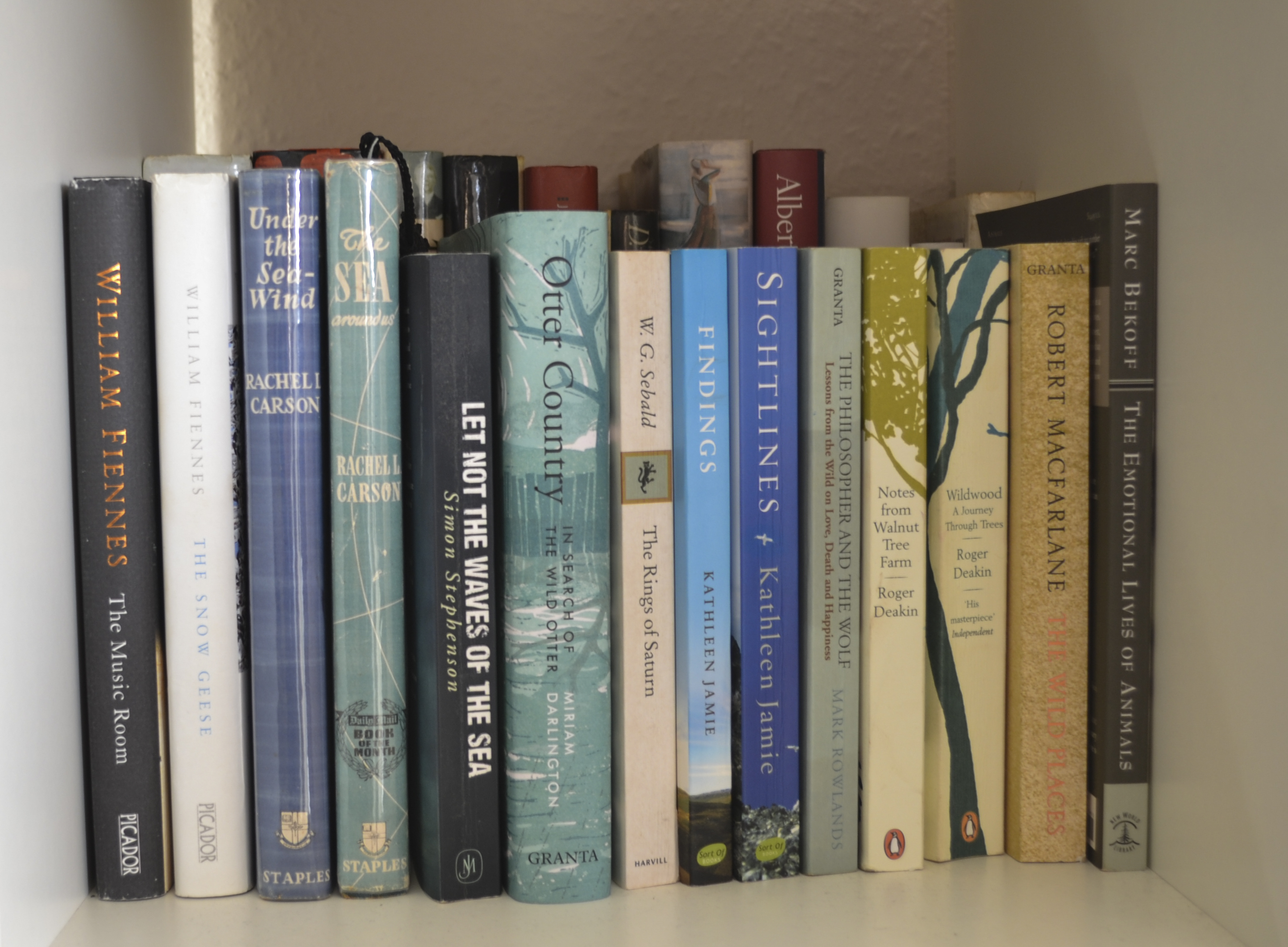
book shelf

Every writer must accept the short shelf life of her books. In a large book chain, there is generally a two-week window for a freshly-made book to go out on front of house display. I’m sure that I’m not alone in going into a book shop to see whether my book has made it to the table at the front. I’m sure that I’m not the only writer who has hovered by the table to see who picks up her book. I’m also sure that I’m not the only writer who has had to stop myself saying childishly: I wrote that. The book you are holding in your hands: that’s my work.

Naturally a short shelf life does not reflect the labour of love that put the book there in the first place. The book shop must display many new and competing books and to try to give each one its due moment to be seen in public in its brand new jacket is not possible for every book. There are many books that have the briefest of public outings. It shouldn’t matter because the true destination of any book is the mind of the reader.

I found out last week, though, that it does still matter what the book shops think. Book shops were a big influence on my writing life. I visited books shops in London to find out how to be a writer. Like a smitten film fan, I hung about on set, hoping that some of the glamour might rub off, or that I might bump into someone who felt about books as I did – that they were somehow as much a part of me as my blood and bone.I used to be able spend a whole day on Charing Cross Road just mooching about, but now the experience of going into a book shop – they are no longer even shops but stores – is more like visiting Tesco Express.

What has changed? Certainly not the merchandise; there are still lovely glossy books for sale with heavenly covers, or the young and enthusiastic staff. Some book shops even have coffee shops where you can browse a stack of potential purchases in comfort. It’s the tables in front of the shop that have changed: the blatant offers; the stickers; the three for twos; the new books for spring; the Richard and Judy recommendations; the Book at Bedtime books; the way that books are marketed like seasonal chocolates or flowers.

Last week at Exeter Waterstones, I noticed a shelf of Christmas-themed paperbacks destined for the return bins downstairs. Of course because it is February, there was a table featuring books to fall in love with. We have become used to this way of marketing. My local express supermarket has red balloons at the tills and the hair salon I drive past every day has changed its window display from ice white to scarlet rose. Even the library has recommended titles written on heart-shaped coloured paper.

I’m not sure that this kind of seasonal theming is appropriate for books because books by their very nature are timeless. My novel The Beautiful Truth was published in May last year, and that does not make it a ‘new book.’ That makes it one of the many hardbacks that have had their moment. By the new rules of marketing my book should not have been the first book I saw when I walked into Waterstones. It should not have been granted prime position on the very front table next to the new Dave Eggers.

The sight of my novel there on that front table made my week, more than that it strengthened my faith in the power of connection. The manager of Waterstones, who attended a talk I gave, had to make a decision to put my novel out on that table. He cared enough about it to ignore the rules and extend its shelf life. It made me realise that behind every piece of marketing there is a thinking human being. Someone has to decide to hang up the red balloons, or not…someone can decide that a book is worth marketing just because they believe in it. And that is worth everything to an author. If I could have found the manager, I would have kissed him.


Finding good work

24 01 2013

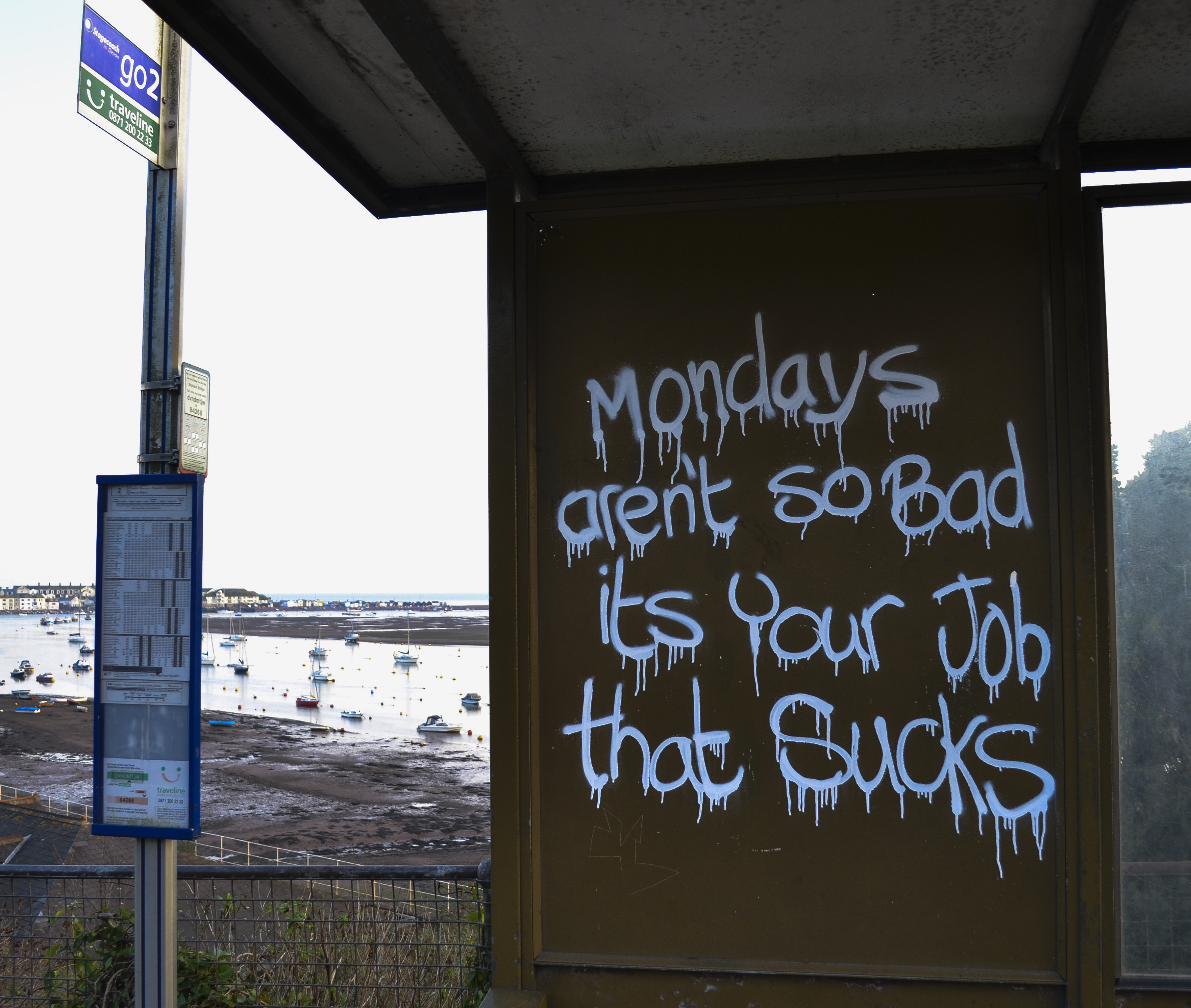
bus stop sign

One of the first paid jobs I had was collecting eggs at a chicken farm. I was thrilled to be offered this job, and at 50 pence an hour it was, at the time, pretty good money. I think I lasted a summer. The chicken sheds filled with rust-coloured birds that viciously guarded their eggs were intimidating. When you stepped inside the vast hangar, dust swirling like sleet in the light, you had to clap your hands to move the hens away from their precious hordes. More often than not, they stayed put, when this happened, and I recall this being vividly demonstrated, you had to go in and fling them off the nest boxes.

The technique required for dethroning a chicken required you to grab one of its wings at the joint and hurl the bird into the centre of the shed with one hand while you reached into the box with the other for the egg treasure. I watched farm workers, young and old, retrieve dozens of eggs with effortless ease. They had sorted their trophies into trays of different sizes while I was still scuttling my way down one side of the shed with my scarf across my mouth and my eyes half-closed against what I was certain would be a full-blooded chicken face fight.

The hens sensed my ineptitude and each time I reached gingerly into one of their boxes, with my teeth gritted, hoping against hope that I wouldn’t get attacked, they went for me. Every time.  I wore two jumpers and a coat, but always my arm was pecked and by the time I got home the marks had become horrible red welts.

Terrifying as the sheds were, they were nothing compared to the battery cages where three or four miserable white birds were crammed into wire spaces no bigger than a hamster cage. Nearly all these birds were raw bald and instead of the eager brightness belonging to the shed birds their eyes had a desperate kind of shine. They smelled of sick. Come to think of it, the whole place smelled of sick, like a hospital ward during an epidemic. That combined with the memory of the soft feel of the eggs that had developed a pouch instead of a shell still makes my stomach turn.

I tried to remain stoic and practical – at thirteen I needed the pocket money – but the sheer grimness of this job gave me bad dreams and made me panic at the thought of the throat-closing stuffiness of the sheds. Once I realised that I actually hated this job, I never went back.

I’ve had other jobs since that have infected my dreams and made me ill. I left a well-paid job that made me feel I was being sucked down and under a lukewarm pond never to be seen again. I rejected full-time permanent work at an office that had employed me part-time as a freelance. I walked out of another office and well-paid position that I might have kept had I enlisted support, but I was sick of living the job that was making me sick.

Recently, the idea of healthy work has been cropping up in conversations with people I care about. It has become a bit of a theme and led me to read again David Whyte’s wonderful study of work and identity: Crossing the Unknown Sea.

Whyte, who left the corporate world to pursue poetry full-time, is eloquent on why going against oneself in one’s choice of work is the worst kind of self-sabotage. We come awake, he says, when we find work that is our own; we come alive when we find the thing to which we can give our full potential. Whyte recalls a late-night conversation over a bottle of wine with his friend, a monk he calls Brother David. The monk listens patiently to Whyte’s own story of unwholesome, soul-sapping, weary work and advises him: ‘You know that the antidote to exhaustion is not necessarily rest?’

Whyte rather ‘woodenly’ asks his friend what the answer is and receives this reply: ‘The antidote to exhaustion is wholeheartedness.’

That evening is the beginning of a sea change for Whyte who ends up redesigning his job and then following his dream of becoming a poet. He is now in demand as a poet and speaker all over the world.

His message is really quite simple, but so difficult to put into practice because it requires a leap of faith. To work with all of your heart is to work with courage, and to work with courage is to come alive. Anything less is going to make us sicken for what we truly need.

In many ways my entire working life has been a quest to avoid exhaustion and to find work that is quite literally good for my heart. I’m still making mistakes and still getting into a panic sometimes when I’m faced with too many fierce chickens guarding their little boxes, but I’m learning to let them get on with it and find my own way out.


Telling the Truth

17 01 2013

Image

I’m grateful to the hardy souls among you who braved the January chills to come and listen to my talk at Exeter Library the other evening. Thank you. We had such a lively debate and it’s always great to connect with readers. For those who couldn’t make it, here’s an edited version of the talk:

One of the questions that preoccupies me as a writer is: how far should the author go in revealing what they know?

This question accompanied me all the way through the research and writing of two novels for John Murray: Hotel Juliet and The Beautiful Truth. At various points along the way, I addressed the question: how much do I tell the reader and the second question: can the reader take it?

I have always used actual events in my work and I use them unfiltered. It feels natural, but also audacious. I enjoy the challenge of creating fiction out of stuff that happens. To take the raw material of life and transform it requires me to work at the very edge of my capacity. Once I’ve set up a framework, I write into another truth. It takes work to find this other, hidden truth, a truth that is not the same as actual events, but feels more authentic. There is an internal logic to fiction that I can only grasp when I’m working within it. So I write from the inside out. I go in to try to work out what I have to say.

When I knew that I was going to be ‘doing’ a book about Poland, I knew that I would be using real events. The Second World War ended 68 years ago. There are still people alive who lived through the war in Poland and I wanted to be faithful to an experience that shaped not only the Polish nation but Europe itself. All of European identity can be traced back to the war. All of us in Europe are in a sense rooted in this war.

I spent the best part of a year reading about Poland. My father was Polish but he never spoke to his four children about his country. In fact, the happiest day of his life was when he became a British citizen. I can still remember him sitting in a chair watching his favourite programme Planet of the Apes with the black and gold embossed passport on the arm of the chair next to him, almost as if he were worried that someone would snatch it away.

As I grew older I wondered why my father was not proud of Poland, why didn’t he share stories of growing up? Why was Poland somehow a forbidden topic?  I realised as I read more about Poland how the country had been mauled throughout history. There had been several attempts to obliterate it as a nation and for a period of one hundred years it had ceased to exist. Poland’s geography made it a target, a jewel to be plucked and plundered. One historian offers an image of a kitten being torn limb from limb by a pair of salivating dogs. The Germans had been defeated only to be replaced by a stultifying and sinister Soviet regime. There wasn’t much of Poland left anymore to fight over. No wonder my father did not want to share his memories.

My research into war-time Poland made for uncomfortable reading. I was stunned by what I read. Often I simply sat and cried. There seemed no other response to the scale of such loss. How comfortable my Britishness seemed in comparison. My Britishness was never something that I was going to have to fight for. I was never going to arm myself with home-made grenades and fight off oppressors. I was never going to have to face near starvation for the right to live in my own country. I was never going to witness my people being executed purely because they were British nationals. I was never going to face the question of whether I would be prepared to die to defend my own country.

Millions of Poles sacrificed their lives. The scale of death in the concentration camps is well documented. What is less well-documented is that more than six million Polish citizens, eighty per cent of the population living in cities, died under the Nazi occupation. Four hundred thousand people died within Warsaw alone. Knowing he was facing defeat, Hitler ordered the city to be razed without trace. Flame-throwers, bulldozers and dynamite teams set to work. Street by street, literally building by building the city and its inhabitants were reduced to ashes.

When the Soviet Army finally advanced on the ruins of Warsaw on 17th January 1945, they found a smoking moonscape. Ninety three per cent of all buildings were destroyed or damaged beyond repair. According to the historian Norman Davies ‘the destruction was on a par with that of Hiroshima, Leningrad or Dresden. A city of 1.2 million no longer contained a single living soul.’

When I began to write my first draft, it was with a sober feeling that I needed to acknowledge what I discovered. As I wrote, I realised that I was working on a story that required me to pay precise attention to the details. It felt wrong to try to fudge things, almost a form of dishonour. I worked intensely. I had maps spread out on the floor and spent weeks tracing my way through forests, trying to find a way through. Days of pacing up and down, leaping back to the laptop when I realised I didn’t know what colour of uniform the Russians wore, or whether they smoked cigarettes on duty (they didn’t)or what a Russian might sound like who was trying to speak Polish. There was so much I didn’t know.

I could have spent ten years on this novel and not come anywhere near close to what I was trying to bring forth. The material I read about the Warsaw rising drove me to the laptop. My own petty daily anxieties were an irrelevance, an irritation. I was so gripped by what I found out, so utterly absorbed in it, I had to try to find a way to bring it to life through characters that needed to be large enough to carry it off.

What I wanted was a story that was as electrifying as the material I was reading. I made many wrong turns. The trouble with writing fiction set in wartime is that I already had so many imaginative associations from film and novels. I knew I had to be careful not to allow these impressions to come to the surface and cloud my judgement. I knew that I just had to concentrate on the facts.

Once I began to focus more closely on the research material, it set up a train of ideas that tumbled out so quickly I had to rush to keep up. It felt like opening a vein. It was a strange and utterly exhilarating time. When I emerged, I felt as if I had been away to war. I remember finishing the novel at Easter and driving across Shaldon Bridge and just feeling amazed that the buildings were intact. There was no rubble, no white dust. How perfect and beautiful everything seemed. It made me appreciate what a truly astonishing thing it is to live in a country completely at peace. 


Walking into a New Year

2 01 2013

Walking into a New Year

After lunch yesterday my friends and I went for a walk. We needed somewhere flat so as not to aggravate my quietly mending knee, and so we choose our closest stretch of sandy beach. Driving along the sea front it was tempting to get annoyed. Everyone in East Devon, it seemed, had stolen our brilliant idea of marking the first day of the brand new year by taking their dogs out for a walk along Exmouth sands.

Everyone. All right, a few people might have gone to Sidmouth instead.

It is curious to see a mass of people out and about and looking relaxed. Often when we encounter people in swathes like this, we close down, hunch into ourselves and try to avoid any form of contact that might tax our reserves of tolerance for those who are not us. Rare are the times when we simply enjoy watching each other.

Shortly after we arrived, a group of young people stripped off their clothes and dived into the cold sea. They held up their arms and laughed as the cold tongue of foamy pink sea licked their white bodies. A few people commented that the swimmers were off their heads, but despite the scoffing there was grudging respect for these human seals. The swimmers and the dogs together did look as if they were having the best time.

There is not an adequate English equivalent for the French word élan. Impetuosity, dash or style doesn’t quite convey the feeling of lightness in spirit, of having fun in a playful way that lifts those who watch. Élan is very different to merely mucking about or showing off. It’s a generous impulse.

Watching others let down their guard is entertaining. I can’t have been the only person on the beach who was having her icy New Year’s Swim snug in the warm changing room of the imagination. Thanks to the swimmers, we didn’t have to strip off and get in. We shivered vicariously.

It strikes me now, though, that too much watching others from the shore could become a habit. Not dipping our toes in the water because others have already done it for the rest of us is the very opposite of living with élan.

In this coming year, I want to live with more impulsion, more – I love this word – ardour. A lot less holding back.

Happy New Year.