Honesty: the source of originality

17 08 2012

Image


I can remember the moment I decided to be a writer. Sitting cross-legged on a dusty parquet floor in a school hall l looked up and saw a young, blonde woman with glinting cat-like eyes and thought: I like her earrings. Not exactly earth-shattering. But the young woman was Fay Weldon and she had given up her time to come into a Devon school and talk to us low-ranking second year pupils.

I don’t remember a word she said. I was in awe, but not intimidated. She made writing sound like fun. I’ve since met Fay Weldon and was able to tell her that she had inspired me. She had lit a spark by showing me it was possible to be young and female and live a writing life that could be enjoyable.  

‘I must have been just starting out then,’ she said and gave a cackling laugh, crinkling those famous eyes. ‘How wonderful!’

Fay Weldon gave me a sense of possibility, a place to aim for, an aspiration. It would take me years to work out what I wanted to say and how best to say it, but I knew that I could be a writer.

While I was in self-training I didn’t read many books about writing. I have the kind of mentality that wants to please and would have diligently read my tutor-authors and tried to put their advice into practice perhaps working against my own grain. I knew that I needed to work out what kind of writer I was and that took a lot of experimenting. For a while I was going to be a poet and then a short story writer, mostly because I was scared stiff of tackling a novel, but once I had started to research my first novel The Avalanche, about a pianist who commits a crime in his sleep, I knew I had found my natural home.

I adore research. I like the adventure of following ideas and leads and trying to piece them together. I would have enjoyed working as a detective, or at least the detectives in fiction or film. One of the best parts about writing The Avalanche was attending court cases at the Old Bailey and meeting the psychiatrist Dr. Peter Fenwick who generously allowed me access to papers at the Institute of Psychiatry and read parts of the manuscript. I like to include real people in my novels and gave him a cameo role. Blending fact and fiction is for me the way to keep things fresh and I think it lends authenticity to the work.

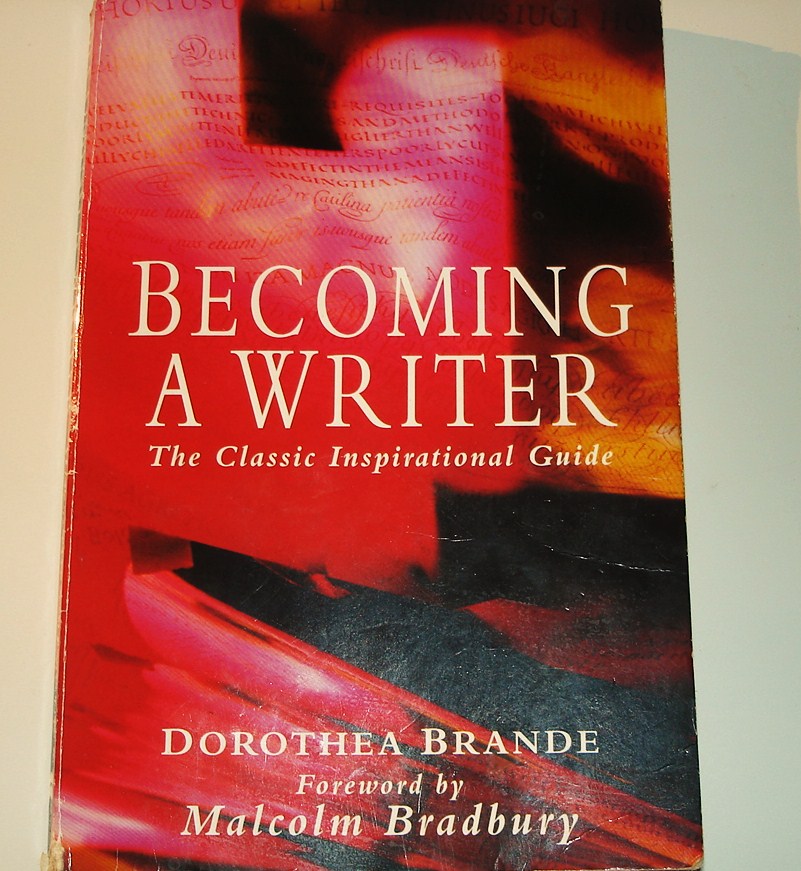
One book that I wish I had known about, though, is Becoming a Writer by Dorothea Brande, first published in 1934. I heard about this through a recommendation by Hilary Mantel whose advice was to read it and then do everything Brande suggested. Irresistible.

There is much wisdom concentrated in a book of less than 200 pages. Some of the book has dated but there are pieces that remain timeless such as Brande’s insistence that honesty is the source of originality. Reading her is a bit like having your strict aunt or godmother round for tea. I love her slightly bossy tone and the way she lets you get away with nothing.

‘If you can discover what you are like, if you can discover what you truly believe about most of the major matters of life, you will be able to write a story which is honest and original and unique. But those are very large ‘ifs,’ and it takes hard digging to get at the roots of one’s own convictions.’

Hard digging indeed.


The gift of time

15 08 2012

I didn’t know that meeting Krystyna would be so momentous. At first I was wary of this strange Polish woman with her waist-length faded blonde hair, smoky dark glasses and frayed yellow coat. When I noticed her marching across the Planty I immediately made plans to leave the bench and find somewhere else for my sorrow. But something made me pause and wait for her.

Maybe it was curiosity. I was certainly in need of distraction. Maybe it was exhaustion. I hadn’t slept much the night before and all I could think about was leaving. I had an afternoon to fill and then, to my relief, I would be going home. Krystyna gave the impression that she had all the time in the world. ‘What a pity, you can’t stay, but never mind we can still talk.’ That was the important thing: conversation, the kind that goes beyond courtesy. The kind that takes place in a concentrated space of time. A true connection.

She inspired me because in that moment she saw the value of exploring what we might have in common. I was far too preoccupied to care. Wrapped in my own concerns, I just wanted her to vanish. It makes me wonder now how many other times I’ve made quick exits to avoid what I think is going to be inconvenient or embarrassing. I’m not saying that every time I’ve been wrong –  quite sensibly I don’t wish to connect with every stranger – but I’m sure there is much I’ve missed along the way. Of course not every bag lady turns out to be a fallen aristocrat. 

Krystyna’s act of generosity inspired a novel. She has no idea of this. When we met in Poland ten years ago she was probably in her late seventies and it is quite likely that she has since died. Do I take more of an interest in people now as a result of meeting her? The honest answer is: no. I’m still looking at the world through my own lens and that is mostly necessary. Empathy for all would be pointless and exhausting. Not long after I returned from Krakow, I went to a talk about meaning and time given by the philosopher and writer Jonathan Ree. It was his view that the greatest gift any human being can give to another is the gift of time. I remember how he opened his hands to illustrate the point and I also remember a subsequent meeting at his cramped university office when he listened to me without interruption.

When my first afternoon in Krakow ended I tried to pay for the coffee and ice cream I’d shared with Krystyna. She refused. She also waved away the spare zloty from my purse and seemed baffled at my protest that I no longer needed the currency.

Her smile was gracious. ‘Maybe you will come back.’


Inspiration

14 08 2012

The close of the Olympics has made me wonder about the nature of inspiration. It is easy to see how the supremely fit superstars of the track and field can inspire a new generation. I salute their courage and tenacity. I’m indebted, though, to a half-blind woman in Poland who started me on what was to be a life-changing journey.

A few years ago in Krakow, I met a woman on a park bench. I was breaking my heart over yet another unsuitable man. The woman’s name was Krystyna. She listened while I sobbed incoherently and after my self-indulgent outpouring told me her own story.

While she talked we wandered around Krakow, crossing the wide market square with its distinctive cloth hall lined with tourist stalls offering amber, wood carvings and toys; we passed jewel-like churches, prayer boards fluttering in the breeze, eventually ending up down a cool cobbled street where we stopped for coffee and ice cream. Krystyna had lost her home during the war. A manor on the outskirts of Warsaw, the house had been taken by the Germans and after the war claimed by nuns. She had no papers to prove ownership and no means to reclaim the property.

She spoke of facing near starvation during the war, of living with perpetual fear, of falling in love after the war, of daring to feel again, of music and of literature. Her voice was girlish as she remembered joyous times.

Her husband had not been faithful to her, but she had loved him and that was what had mattered most to her: that she had loved with all her being. He had died. Now she was alone, her sight was failing, and she lived in a grim block of flats used by drug-addicted prostitutes and their clients. What struck me about Krystyna was her intelligence: she was fluent in at least half a dozen languages, her resourcefulness: she spent her days in the park and in coffee shops to avoid time in the flat, and her courage: she acknowledged her losses with humour, irony and grace. That afternoon my own heartache lifted. I returned to London feeling renewed and hopeful.

I wrote to Krystyna, using large font, but never received a reply. Engrossed in my philosophy studies, I completed my degree, started teaching and finished a book I had begun in Africa. Later, I moved to Devon. My novel set in Zambia was published and I wrote another set in Vienna. During a meeting with my editor and agent to talk about the next project, they asked for a new place, preferably a city, somewhere with atmosphere, history, romance.

‘Krakow,’ I ventured. ‘I’ve always wanted to do a book set in Krakow.’ Now I realise how naive I was to think that I could just ‘do’ a book about Poland, for as soon as I started seriously reading and researching I knew that I would have to face head on the Polish experience of the Second World War.

Nearly three years later I had enough material for five books. For authenticity, I had tried to use first-person accounts of the occupation and resistance. I needed, though, a character strong enough to carry it all. Krystyna emerged. Not the Krystyna I had met on the park bench, but a character who had something of Krystyna’s strength, resourcefulness and imagination.

Each novel I’ve written has demanded more of me than I think I can give. Krystyna’s spirit kept me going through what was a tough write. I moved home three times during the writing of The Beautiful Truth and didn’t unpack until I’d finished my third draft.

Here, I’m going to writing more about how I work, about ways of looking at writing, about ideas and people who inspire. Each week or so I will choose a theme and write a short, but thoughtful essay. I do hope that you will join me and comments are welcome along the way.