Lessons in leadership

2 02 2014

Image

When I first started secondary school teaching I was given advice on how to manage my classes. I was told that I mustn’t be too soft or the students would take advantage. Ideally, I wanted them a little afraid of me, and that way, I was assured, I would always get what I wanted, which was complete control of my groups.

The advice was well-meaning and intended to be supportive. Soon after receiving it, I decided that I would ignore it. The way I looked at it the last thing I wanted was to walk into my work place every morning and feel the students retreat from me in fear.

I had several reasons for not wanting to use fear in establishing my authority as a class room leader. The first is that I’m not an especially frightening person. I’m not very tall; I have a small frame and I don’t have a loud voice.  I have an open and enquiring approach to life and my style of engaging with people is part of my approach. Before I entered teaching I worked as a journalist and author and had developed a communication style that was collaborative and compassionate. I knew that actively listening to people and being prepared to work with them to find creative solutions to obstacles and problems had proved invaluable in interviews and in the news rooms where I worked to fierce deadlines.

You cannot survive as a national newspaper journalist if you are soft. My previous working life had demonstrated that I was not a pushover, so it was a bit of a shock to discover that a teacher who doesn’t use fear is a teacher who doesn’t get respected. In the early days of teaching, I often felt compromised. When democratic rule failed and I had to resort to using some tough tactics, it felt wrong. I believed that there was a better way to lead than merely acting scary and so I began to study leadership as an art rather than as a tool.

The Italian thinker Machiavelli (1469-1527) would have derided my early attempts to bring my students on side without resorting to brutality. Machiavelli believed that that it was better to be feared than to be loved. As far as Machiavelli was concerned Cesare Borgia, who appointed a tough commander for a particularly unruly part of Italy, allowed him to rule with an iron fist and then had him dismembered and put on display for all to see in the town square, was exactly the role model Machiavelli was looking for. His view was that given half a chance people would lie, cheat and act out of greed and self-interest; it was unfortunate, but people were just made that way and couldn’t be trusted. Incredible as it seems to me, this line of thinking is still prevalent in many institutions today.

As Machiavelli’s examples testify, undoubtedly fear as a form of control works. It makes people listen and it makes people behave. A whole generation of people schooled under corporal punishment understand the dynamic of fear and obedience. With this philosophy the ends justify the means.

The consequence of Machiavellian thinking, however, is that obedience shuts people down. Entire nations were shut down and suppressed under fascist and communist rule. If rule by fear was truly as successful as Machiavelli believed it could be then those nations would have remained under control to this day. Machiavelli failed to see that rule by fear only works temporarily. After a while people get used to brutality and even become bored with it. Brian Keenan’s illuminating study of the mind and personalities of hostage and captor in An Evil Cradling writes of daily beatings and torture becoming ‘insignificant, a mere passing inconvenience.’ The real hurts are ‘psychic’ although if the trauma is too deep and too prolonged then there is the refuge of insanity, against which Keenan fought.

It seems to me that Machiavelli did not believe in courage. He did not understand that people could be inspired either by their own determination or by courageous leaders such as Nelson Mandela. Perhaps the only role models available to him were demented and murderous ones: Macbeth as opposed to Henry V. And we know what happened to Macbeth, whose act of diabolical treachery against mild King Duncan turned against him and plunged him into the deepest form of paranoid fear. If you rule with fear, then fear to some extent will also rule you.

Machiavelli was forced into exile by the Medici family who believed that he was part of a plot to overthrow them, and so we must view his ideas on leadership with an awareness of his own desperation to return to public life. More enlightened philosophers such as Kant recognised that it is not necessary to act like a beast in order to be respected. Human beings could thrive if they were treated as an end in themselves. With Kant we have the beginnings of humane philosophy.

Nevertheless Machiavelli’s ideas are still influential and The Prince is still read by many politicians. The stream of meanness that runs through the popular entrepreneurial show Dragon’s Den has elements of Machiavellian thinking. On television and through social media cruelty is as popular as it ever was for creating an entertaining spectacle.

The enjoyment of cruelty is perhaps part of the self-interest and greed that Machiavelli identified as basic human nature. It is challenging to do some hard thinking about what we truly admire over and above what we find frivolously entertaining. We perhaps understand cruelty too well.

What we so often fail to stand up for is that leaders who treat their troops, their workers, their students, their followers as if they matter will always win over leaders who threaten and bully and use shame to diminish. Fear so easily ignites rebellion as shown by countless testimonies from the underground resistance movements of the Second World War.  

I also recognise this truth from teaching. Rebellion is a healthy way of testing whether fear is real. It lets the leader know that she is on the wrong track and needs to either change her leadership style or listen a bit more attentively.

Rebellion also creates an opportunity for some mischief and this, too, can be valuable. Reindeer travel in large herds across wintry landscapes. The herds are led by the elders who know all the snow-covered tracks and have the wisdom of experience to navigate the way through. When it is time to rest, the elders can bring the entire herd to a halt to lie down in the snow. Sometimes, though, the younger reindeer want to carry on and they can get a bit playful and move to the front. In his study of leadership The New Leaders the Daniel Goleman describes such a scene in which the elders patiently get up and move the subordinates back in line. After a couple more tries, the elders give up and let the youngsters ‘take the lead.’ This is a fine example of a discerning leader who knows how to temper discipline with tolerance. Machiavelli could have learned a lot from watching reindeer.




Wonderful year

30 12 2013

It’s been a wonderful year. Looking back over images of the past twelve months I see how new themes have emerged in my work and become threaded into all that I do. Just before Easter, I moved my horses to a new field and I see just how inspirational the Devon landscape has been to me. Living closely with the rhythms of nature has helped me to appreciate simple unfolding beauty, such as the unfurling of new oak leaves, or the appearance of the first bluebells, the changing colours of the fields and the sky.

I’ve shared warm and thoughtful times with friends both in the landscape and in the classroom and learned from every encounter. In the summer, I made new friends with the launch of Thinking Through Philosophy in my home town of Teignmouth and was heartened and encouraged by the generous and open-minded response of all those who came to the seminars. It has helped me to see that philosophy is most relevant and life affirming when it is grounded in every-day living.

Being grounded in what is real has made my year wonderful. As with every year, there have been challenges and sorrows and disappointments; it hasn’t always been easy. Looking back, though, the disappointments have already faded and I see that there have been many more new opportunities and experiences than I anticipated at the start of the year when I was still limping and depressed from a severe knee injury.

Twelve months on and due to regular walks and rides I feel fitter than I have ever been.  I feel joy each time I connect with my horses. They have helped me to be patient and to focus on one step at a time by doing only what I felt physically capable of.  Halfway through the year, I still needed someone to come out with me as I felt too insecure to ride alone. Now when I look back I see how far I’ve come. I can remember the first time I lay on the ground and the feeling of being connected to the earth and knowing that my body was going to get stronger as long as I didn’t push it. Of all the lessons of 2013, the most significant for me is taking note of when I need to rest.

It’s been a year of recovery and recuperation and reflection. Nonetheless, it’s been an active and productive year.  Ideas that I have long wanted to put out into the world are now beginning to take shape. In the autumn I was privileged to help with the training of untouched ponies on Dartmoor through my association with the community interest company the Dartmoor Pony Training Centre. In handling these highly sensitive and reactive feral ponies, I learned to listen even more closely to the signals from my own body language and came away deeply moved by the experience. Those days of silent communication in a light-filled cold barn were thrilling and transcendent. 

In January I am launching Thinking Through Horsemanship, a long-nurtured project that brings together my twin passions for philosophy and for horses and develops ideas I have been thinking about for over a decade. The pilot will launch with a group of young people at Sirona Therapeutic Horsemanship.

Choosing images from the year was difficult, but I was guided by the theme of wonder, one of the key preoccupations of philosophy. To do philosophy is to adopt an attitude of wonder. Here are some wonder moments from the past twelve months.

I wish all my readers a warm and wonderful start to 2014.

Image

New oak leaves

Image

Bluebells in the wood

Image


Cattle though the hedge

Image

Lisa with Dragonfly

Image

Marian with Sheranni

Image

Philosophy in action: Gordon with Naomi

Image

Jet on Dartmoor


Image

Pippa with Stanley on Dartmoor 

Image


July sky


On the verge of knowledge?

13 12 2013

Image

This week I’ve been talking to teenagers about philosophy. Yesterday a boy asked:  what do I get out of it?  Little did he know, but his question was not something I could easily answer. What was he hoping to get out of it? Did he want philosophy to point him in the direction of living a more fulfilling and engaged life, or did he want to know what a qualification in philosophy was worth?

It turned out that he wanted to know whether philosophy was taken seriously as a discipline. Was it equal to studying history or maths or science?  Was it recognised as a proper subject? This is a question that crops up fairly often in philosophy, especially among older students. They want to know that a subject is legitimate before they raise their energy to meet it. They want to know that it will be worth the investment because they are already very busy people. Only this afternoon during a creative thinking session, a sixth former asked with genuine puzzlement and exasperation: “I wonder whether you could tell me why I feel so tired all the time?”

After a quick lifestyle check in which he said he got enough sleep, regularly exercised and drank enough water, he admitted that he is the kind of person who gives life one hundred percent. Whatever he does, he has to give it his all, and that after a while gets exhausting. When I suggested taking half an hour a day to do absolutely nothing except let his mind take a rest from incoming information, he looked doubtful and then thoughtful. He said he might give it a try. I joked that the ultimate challenge now is to do absolutely nothing except give the mind some clear thinking space. In this age of non-stop doing, simple thinking has become the last thing many young people do when they feel overwhelmed and stressed. 

The group wanted to know: if humans are so clever and so successful why haven’t we got to the stage yet when we take time out to think creatively every day? Why have we invented a world of information and forgotten that we need time to get our heads around some of the new stuff that keeps coming at us daily. Why, they wondered, have we created a world in which young people in particular feel under pressure?

‘It’s because we’re greedy and competitive,’ one boy suggested. ‘Is it because we don’t know when to stop?’ another queried. ‘It’s because we have to feel that we’re making progress, and this is the way we’re used to making progress, by new inventions.’ These already overwhelmed boys of sixteen wanted to know whether there might be a limit to our human capacity for novelty and invention. When might it all stop?

The human capacity for invention intrigued the philosopher David Hume (1711-76). He believes that the imagination has a primary role in the way in which we access knowledge. One of Hume’s themes centres on the limits of knowledge. He shares with John Locke (1632-1704) the theory that the mind starts out as tabula rasa, or blank slate, and gains ideas through experience or impressions. For Hume, every idea we have is copied from impressions stored in the mind. We might want to design a fantastic building made from glass or ice, something never before seen, and we do this by combining impressions of materials and techniques previously experienced. Hume’s own example is a golden mountain. We might never have seen one, but we could invent one based on what we already know.

Hume’s theories intrigue because it is still not clear how we can know anything. It is one thing to say that we can create new knowledge from existing impressions based on experience, but does that mean that we can’t ask questions about what we don’t know? Do we have to remain within the boundaries of empirical knowledge? My adult seminar group this week wondered about the limits of knowledge and our chosen question delved into the problem of infinity: is infinity indefinable?

Gordon said that questions about what lies beyond what we know are impossible. We simply can’t make the leap. Our minds need to feel secure. Hume would have agreed. He liked his impressions and ideas neat and tidy and would have had no time for speculative nonsense. Bertrand Russell took a similar line, once claiming that the universe is a ‘brute fact.’ It exists. End of question. Get over it.

There were a few contemplatives among the group for whom this was not enough. If facts and evidence and data are the primary form of knowledge, why do we continue to ask metaphysical questions? If we’ve come to a dead end in terms of our method of gaining knowledge, and Russell thought Hume had pretty much said it all, then why do we feel that there is more to be discovered? Why do we dream and speculate and feel a sense of there being something other than the hard facts? And what do children know?

Steve shared a comment made by his three-year-old grandson. One day when they were out walking his grandson took in the scene around him and then turned to Steve and said: ‘When does it all end?’ What he meant was not that particular day out with his grand-dad, but life itself, in all its swirling glory.

To a three-year-old life is infinitely mysterious. I can remember a similar metaphysical moment with a three-year-old nephew one snowy Christmas on a walk through a village sparkling in the sun after a pub lunch by a log fire. As we crunched up the hill, my nephew looked into an immaculate sky and asked: ‘Belinda, is God real?’ I tried not to patronise him or fob him off with …well some people say…I told him about the philosophical arguments for the existence of God and said that he would one day have to make up his own mind about whether they were true or not. I like to think that I gave him something more to think about.

The age of three is a good starting point for philosophy, perhaps three is the ideal age for wonder. In thinking of how the world appears to a three-year-old, we remember that it is not all obvious and precisely thought-through. There are many things that need to be puzzled over and discussed and understood, many things that seem mystifying. Many impressions that have not yet become ideas.

When a close friend’s three-year-old came to Devon for the first time he was puzzled by the grass verges which were particularly intriguing to a boy who had in his short life known only London streets. He was curious and wanted to know. ‘Belinda, are the pavements under the grass?’  I told him about verges – a strange word now I think of it –  and he recombined his impressions. Hume would have said that he updated his imagination. Later on my friend’s son was able to add another new idea. After a particularly exciting time at the beach, he asked: ‘When are we going to that big canal again?’

Three year olds don’t need reminding to ask questions about life; they do so naturally and spontaneously. In recalling these moments of fresh openness to life’s experience, I think of the older boys today, so initially weary and jaded as they talked about the possibility that we might one day know it all, perhaps we would reach a Humean dead-end, until one of them said that there would always be as many creative ideas as there were people. ‘I guess that’s true,’ another said and their faces shone with wonder for a moment.

It isn’t going to end. There are always more questions, just as long as we remember to keep asking them.


Nasty nature

19 11 2013

Image

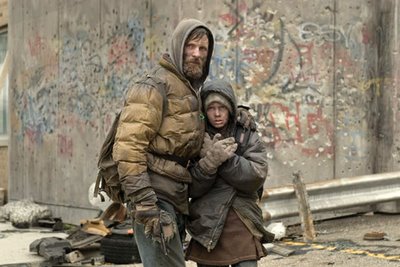
scene from film adaptation of Cormac McCarthy’s novel The Road: teaser-trailer.com

Thomas Hobbes would not have been surprised at the revelations this week that former co-op bank chairman Paul Flowers, now known forever as the ‘Crystal Methodist,’ took drugs to ease the pressure of his demanding job.

The influential political philosopher Hobbes, who lived through the whole of the English Civil War, recognised that life is pretty lonely at the top and that most people are driven by fear. Fear had been with Hobbes from birth when on hearing that the Spanish Armada was approaching, his mother went into labour early. ‘Fear and I were born twins,’ Hobbes later said.

In complete opposition to Epicurus who argued that death is nothing and therefore something that we really need not be afraid of, Hobbes believed that fear of death is a very real anxiety for most people. Most people would trade their freedom and security in exchange for protection from violent death. Police states and military dictatorships are preferable to what Hobbes called a ‘state of nature’ in which humans turn feral. According to Hobbes, humans left to their own devices could not help but take advantage of each other and would end up tearing each other to pieces.

Cormac McCarthy’s magnificent novel The Road, set in a post-apocalyptic America, takes a powerful and poetic look at what happens to people when society becomes extinct, and he comes to similar conclusions to Hobbes.

“He walked out in the gray light and stood and he saw for a brief moment the absolute truth of the world. The cold relentless circling of the intestate earth. Darkness implacable. The blind dogs of the sun in their running. The crushing black vacuum of the universe.” The Road.

As McCarthy observes, few humans will show mercy to others when in a state of intense deprivation and fear. We have plenty of examples of crimes of human evil from the holocaust and world wars that fully support Hobbes. We also have plenty of examples of humans helping themselves from the world of business banking. When a natural disaster breaks, such as in the Philippines, one of the first priorities is to restore law and order so that scarce resources can be shared out fairly. By Hobbes’ account we are incapable of being fair on our own. We need systems with people in uniform telling us what to do.

Hobbes wrote as a systems thinker, a top-down man, who believed that only way of curbing man’s natural uncontrollable desires to loot, to cheat, to lie, to steal and help himself is to put in charge a dictator who would rule with an iron fist.

Our discussion tonight found much to agree with in Hobbes. Why is it that people cannot get along? Why is it that Protestants and Catholics continue their civil wars through their football teams? Why is it that in today’s democratic Britain we have never had a period of social harmony that has not been interrupted by gang violence or street riots? People will always have splintered beliefs, argued one member of the group. Even if we dissolved all religion, people would still fall out with each other.

So maybe Hobbes is right: it really is ‘a war of all against all,’ but several among us tonight felt that mankind was certainly not lost. Even though we might recognise the terrible landscape painted by McCarthy and other writers who explore the theme of dystopia, we are making progress as a human race.

We’ve certainly moved on from the seventeenth century when Hobbes was writing his political treatise. Hobbes believed that humans behaved like animated machines. It was our physical makeup that made us unruly and driven by our own desires. We are not right or wrong in a state of nature, we are in a sense innocent of society’s civilising influence. Morality is only possible after we have created a structure for it.

This narrow view of mankind, still influential in some areas of education and psychology, limits us. Hobbes did not consider the creative aspect of mankind; the idea that we hold the solution to the problems we have created would have been alien to him. For Hobbes, too much freedom led to anarchy and chaos. For less rigid philosophers, including Aristotle, who Hobbes blamed for spreading the idea that humans could choose how to live virtuously, a free-thinking rational way of life is essential for growth, for experimentation, for innovation. Without reasoned free thinking, how can we ever learn to advance on the old worn-out ideas that no longer apply? We all know plenty of institutions that cling to a Hobbesian world-view that doing what we’ve always done keeps us safe and protected, and we all know how stultifying and often dehumanising it is to spend even a short time in such places.

The chance to flourish and grow, as Aristotle argued, is what gives people a sense of purpose and meaning in life. Deprived of the opportunity to make something of our lives, to find something for which we can live or die, we are indeed on the road to chaos.

https://www.facebook.com/groups/Thinkingthroughphilosophy/


The Epicurean Life

13 11 2013

Image

“It is impossible to live a pleasant life without living wisely and honourably and justly, and it is impossible to live wisely and honourably and justly without living pleasantly.”

Mention the name Epicurus and most people immediately think of a well-known brand of fancy preserves and pickles. To most people an ‘Epicurean’ would be someone who indulged in a life of fine wining and dining, someone who preferred to shop at Waitrose rather than Asda, who chose cashmere over acrylic, and whose idea of heaven was a long Sunday morning lie-in reading Nigel Slater or Nigella Lawson: a bit of a foodie hedonist, right?

But were Epicurus (341-270 BC) still alive today, he would certainly not recognise himself from the above description. All right, he might have enjoyed reading Nigel Slater and looking forward to some exquisitely tasty meals, but he wouldn’t be interested in gorging himself or overdoing the wine: Epicurus the philosopher of ancient Greece firmly believed in moderation and living the simple life. He has often been misunderstood mostly because of his key belief that seeking pleasure is the best way to become happy.

For Epicurus there was nothing more pleasant than spending time in a beautiful garden in deep conversation on life’s meaning with his closest friends and followers. In this garden they drank water rather than wine and were kind to each other rather than competitive. Indeed the garden at Epicurus’ home in Athens where he taught his ideas became well-known and established as the school of Epicurean philosophy, much in the same way that the Academy was renowned as the school of Platonic thinking and the Lyceum, the school of Aristotle’s ideas.

For Epicurus the lessons of the garden were a form of practical philosophy. Gathering together people who were interested in ideas of life and death was a way of helping people to work out what they really thought and to overcome their fears and anxieties. Following Socrates, Epicurus recognised that philosophy is most useful when it can be directly applied to ordinary life. Philosophy can help to shed light on puzzling problems and ethical dilemmas and offer clarity. This Epicurean way of philosophy was incredibly popular during his time and is still one of the best models for doing philosophy rather than learning about philosophy.

Critics of Epicurus portray him as an atheist and hedonist, but his philosophy was more nuanced than mere self-centred pleasure-seeking. He believed that some desires were natural and necessary, such as the desire for food, shelter and company, and that we should pursue those desires.

In tonight’s seminar discussion one of the group mentioned that in the aftermath of the typhoon some Filipinos were looting for food and that was something that we considered entirely natural and understandable given the scale of the disaster. Looting for luxury or non-essential goods, however, was not considered natural or understandable, and parallels were drawn with the disaster in New Orleans when some people caught up in that situation used the break down in social structure to their own advantage by committing crime. The question that emerged was: is justice natural? Our enquiry seemed to follow the line of thinking that justice was cultural, thus agreeing with Epicurus who claimed that justice was a social agreement not to cause harm or be harmed. He viewed justice as a form of community policing. People have to first agree on what is acceptable or not acceptable and this code of conduct is then enforced in order to protect the community. This seems entirely reasonable. Most people want to live in peace within their communities and justice is one way to ensure that people know where they stand. In peaceful communities people have no need to loot or form vigilante groups. Chaos and desperation change the rules of justice.

As we have seen in situations of chaos some people cannot resist the temptations of corruption. Is this because they lack natural justice, or is it because they know they can get away with ignoring justice in situations of extremes? Epicurus might have argued that people don’t automatically turn bad when there are no community police around to stop them misbehaving. Instead given a breakdown in any society’s structure, people will see what they can get away with. We can all understand this very human impulse. We can all act impetuously. It’s what makes us sometimes jump red lights or neglect to tell a cashier that she has failed to charge us for the item now in the bottom of our shopping bag. We bend the rules of justice to make make them fit our new circumstances, and we even have a word for it rooted in justice itself: we call it justification.

Epicurus taught that we can learn to understand our desires and so learn how to appreciate all that we have. Once we understand that what we already have can bring us great pleasure then we will be less inclined to want more or feel dissatisfied. If we read the search for pleasure as the search for well-being then these very ancient ideas make sense today. In this reading, Epicurus is a very modern-minded philosopher whose ideas are certainly compatible with contemporary Buddhist thinking about suffering and craving and living mindfully. In terms of offering us food for thought into current ethical living, Epicurus has not yet passed his sell-by date.


Friends for life

20 09 2013

Image

Most people would agree that friendship is necessary for a good life. I can’t imagine living my life without my friends and some of my most precious friendships are with people I have known for forty years. Like most people I sometimes take my friends for granted and forget to call them for weeks at a time, and because they are my friends, they never blame me for my absences or my neglect. In the same way, I’d never dream of taking them to task for not calling me more often. With my close friends, I can assume that our friendship is worth preserving because there is so much shared history and humour.

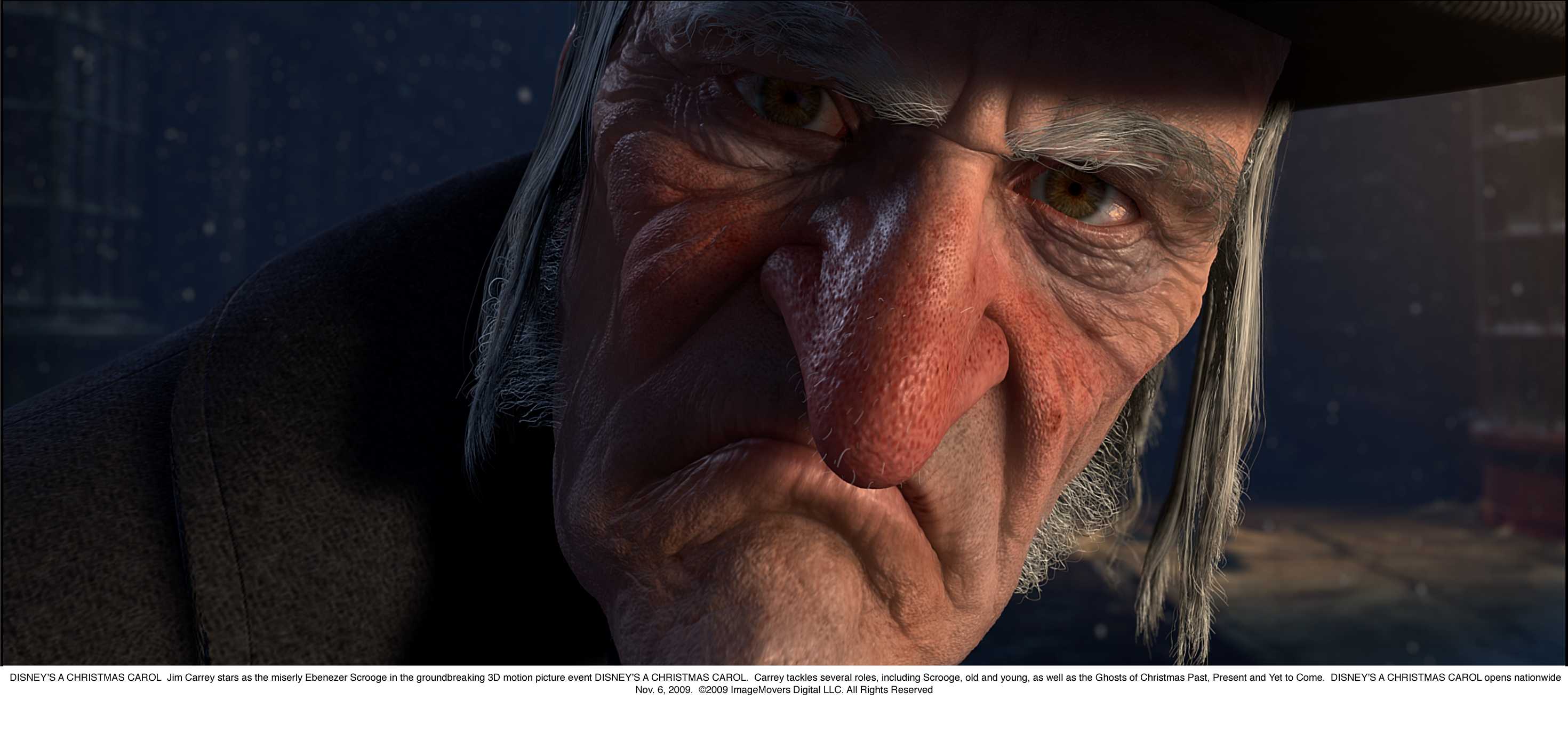
Thinking about Aristotle’s ideas on friendship has made me wonder, though, about the qualities within friendship that I value most. For Aristotle friends are necessary at all times of life: to show us how to appreciate the good times and to support us when we fall on hard times. Dickens made a similar point in creating the character of Ebenezer Scrooge, a man too miserly for friends, who has to learn about benevolence from the ghosts of the past, present and future. The message of A Christmas Carol is that no matter how much money you have, without friends or people to care about, life is impoverished and not worth living.

Written more than three hundred years before Christ the Nicomachean Ethics, Aristotle’s series of lecture notes, develops this same theme. The Ethics develops the idea that friendship is essential in the pursuit of happiness or a flourishing life “for no one would choose to live without friends even if he had all the other goods.”

For Aristotle, friendship goes beyond the functional. We don’t simply need friends to avoid the abyss of loneliness. “Friendship is not only necessary, but also fine. For we praise lovers of friends and having many friends seems to be a fine thing.”

Still, he says, there are many disputed points about friendship itself. For some people being friends means seeking out people who are similar to them. Hence the saying “Birds of a feather stay together.” On the other hand it is said that similar people are so alike that they are bound to fall out, “like the proverbial potters quarrelling with each other.”

In attempting to unravel these seeming contradictions, Aristotle wonders whether friendship is possible among all sorts of people, or whether ‘vicious’ or unpleasant people can be friends. He also wants to know if there is one species of friendship, or more.

He begins with a general account of friendship. The object of friendship is to find what is lovable in a person. For Aristotle, not everything is loved, but only what is lovable, and this is either good or pleasant or useful. He goes on to note that what is useful is the source of some good so that what is good and what is pleasant are lovable as ends.

This raises the question: “Do people love what is good, or what is good for them?”

In other words, do we seek out friends just because they will make us feel good? If so, doesn’t this mean that all friendship is a reflection of our own egoistic needs and desires? Do we want to be friends with people who will make us shine?

Aristotle’s way of thinking is that friends are necessary in helping us to become better people. With certain friends I feel that I can be my ‘best self,’ not my most arrogant self, but my true self. I’ve just, as it happens, finished a long phone call with one such friend who always has me reaching for my note book as we speak. She makes me think in ways that make my brain sparkle. Our friendship creates a space where we discuss (often quite mad) ideas, and we are entirely comfortable with this. We ‘get’ each other and we both share a sense of the ridiculous. At the end of the phone call she had me hooting with laughter as she told the story of a long-ago marriage proposal from a butcher.  The italics do not do justice to the outrage and incredulity in her tone, for my friend is a vegetarian and devout friend to animals.  I’m writing the short story in my head for her, and this helps to explain what I think Aristotle means when he tells us that: Complete friendship is the friendship of good people.”

For Aristotle a complete friendship is only possible with someone who is similar in ‘virtue,’ someone who holds similar principles, beliefs and values to our own. I’d have to add humour to that list to make it complete. Still, it makes friendship a matter of morality.

Now those who wish goods to their friend for the friend’s own sake are friends most of all; for they have this attitude because of the friend himself, not coincidentally. Hence these people’s friendship lasts as long as they are good; and virtue is enduring.”

The aim of friendship, then, is to strengthen the higher qualities in people. For the Greeks friendship was of primary importance for the functioning of a healthy society. People could practise noble values through reciprocated acts of generosity and loving and concern for others. If enough people do this then society becomes less selfish as a result.

Aristotle admits, though, that such mutual friendships are rare, since people who are concerned with higher values are few. Not everyone wants to live a fully aware life. Most people would rather just spend a pleasant time hanging out with their friends without over concerning themselves with their moral well-being. We might say that this type of principled friendship is impossible now that we have so many other distractions such as the internet and the demands of our families and jobs.

Aristotle recognises that friendships change over time.  Friendships formed out of utility can be easily dissolved and Aristotle says we shouldn’t worry about this.

“There is nothing absurd in dissolving the friendship whenever they are no longer pleasant or useful. For they were friends of pleasure or utility and if these give out, it is reasonable not to love.”

Friendship which matters most is friendship that helps us to understand ourselves. Aristotle is clear that we must be good to ourselves before we can be good to another person. If we are good to ourselves, we wouldn’t wish to be anyone else even if that other person had every good going for him. Aristotle claims that a good person “practically never regrets what he has done. Every action is useful feedback. This strikes me as a pretty modern idea as does his conclusion that friendship is the highest form of benevolence. If benevolence is an expression of our highest self, we are complete when we give our best efforts to others.

Nicomachean Ethics, translated by Terence Irwin (Hackett 1985)


Failing better

4 09 2013

EVER TRIED.
EVER FAILED.
NO MATTER.
TRY AGAIN.
FAIL AGAIN.
FAIL BETTER.

Samuel Beckett (1906-1989)


The start of a new school year always poses questions about success or failure. For many students, dreams and hopes often lie somewhere between A and B. Try telling a student who didn’t get the grades she hoped for that she didn’t ‘fail’ and she will probably bite your head off.

I think we need a new definition of failure. Samuel Beckett’s idea of failing again and again until we get better at whatever we are trying for is a useful place to start. Like so many writers I remember most the commissions I didn’t get, the staff positions I was overlooked for, the articles that didn’t sell, the novels that remained unfinished, the stories that didn’t quite make it, the terrible poems and the over ambitious film projects.

I have perfect recall of all my ‘failures.’ I could write a great book. I’d call it: Spectacular. It would be an account of all the things I tried that fell flat on their face, of all the things I tried that seemed like great ideas at the time.

Beckett reminds us that we can only get better at failing. I heard yesterday about a girl who has sat her GCSE English exam eleven times. The government has said that students who fail to get English and Maths will have to carry on sitting the exams until they pass at grade C. Some students are going to be sitting their exams more than eleven times; they will have to keep on failing until they pass.

No doubt this is a horrifying prospect for many parents and teachers of students who truly struggle with exams. To force a young person to fail and fail again seems cruel. We are right to want to protect young people from feeling worthless, but saving them from failure is not going to help them succeed.

Beckett’s definition of failure asks us to reconsider failure as possibly something positive. Say the word failure aloud again and again, and inevitably the flabby ‘f’ will depress all the air and energy from your body. The words failure and deflate feel the same in the mouth. Failure equals a slump. Failure is heaviness in defeat.

But whenever I read Beckett’s words I feel a lift, a racing feeling, a wanting to get back to where I left off, so that I can try again, do something different.

And that really is the key to understanding failure. When we fail, we are given an opportunity to do things another way, put a new spin on them, rip them up and start all over again. Looked at this way, failure is positively invigorating.

The trouble is that so many people (and I’ve been there) think that failure is the ‘end.’ It is the sum total of all we amount to. This is a form of zero thinking. It usually runs something like this: this is the best I can do, and obviously this isn’t good enough, therefore I’m a useless human being.  I can bet that girl who took her English exam eleven times wasn’t thinking about failing better each time she went to the exam hall. I bet she was running through the usual script of being useless at English.

If we take the deflation and defeat out of failure by instead thinking of it as a form of reaching then it can help us to stretch that much further. We might get within fingertip distance one time, but just knowing that we nearly got there, we nearly touched it, can push us on to the next level of failure. That is failing better. 


Nietzsche and the scarecrow

7 07 2013

Image

Nietzsche has been much on my mind this week, specifically his call for a revaluation of our values. The old system of good and evil, Nietzsche declares, is outdated and what we need is a new way forward so that we can rise to noble values, such as courage, feelings of fullness and ‘overflowing power.’

If Nietzsche were alive today he would be a leader in the new enterprise culture. His originality of thought, his provocation, his challenge never to accept the status quo, belong to the current age of uncertainty. In order to thrive in a world where there are no jobs for life, we need to be bold and we need to be innovative. We need to move beyond comparison and resentment of those of higher status and into a different sort of pride that allows us to be generous. In this new Nietzsche-inspired moral landscape, self-deprecation causes confusion. Instead of putting ourselves down, Nietzsche would argue, what we must do is to be honest and to share our best creative efforts.

Nietzsche’s aim for humanity was a form of ‘self-overcoming.’ According to his assessment, discrimination between the rulers and the ruled had created a master and slave mentality that in turn led to a morality based on resentment of the strong by those in subordinate positions. This unhealthy power structure still dominates many institutions today. I gave up taking breaks in staff room because of it. Griping is part of the curriculum in every school I’ve worked in.  If Nietzsche were still around to see what we have done with our magnificent education, I have no doubt that he would be appalled. So many brilliant minds creating so many meaningless work sheets and teacher tasks.

Of course, not all of what we have done to education is wrong. Many young people thrive under our current system, but few who work in education truly believe that we have the best-designed schools and programmes of learning. Anyone who has ever worked in a school could come up with at least one idea of how things might be done either more thoughtfully or imaginatively. Schools still tend to value efficiency over innovation. And sadly schools still tend to promote what Nietzsche called the ‘herd’ mentality. Speaking out, standing up for what you believe in, taking risks, is still seen in many educational establishments as, well, just too risky.

Nevertheless much of Nietzsche’s philosophy just does not work for me. His attacks on the philosophers who came before him, notably ‘old Kant,’ are juvenile and much of his writing is clever-showy and attention-seeking. If he had resisted his own resentments and his tendency to hurl grenades at previous moral thinking, he would be worth listening to. Much of what he says is a rant, interesting and exuberant, but still a rant. In style, Kant cannot be compared; he is no brilliant essayist, but in his series of critiques he does the hard spade work of thinking through morality and leaves us with far, far more than we need: an entire ethical system based on treating each other with respect.

This leads me to my photo of the scarecrow. This afternoon I stopped my car on a narrow lane to take the shot of my first encounter in years with a real scarecrow, by which I mean one put into a field to actually scare things rather than one featuring in a festival. Lifting my camera, a white van came storming up the lane straight into my view. I went over and politely explained that I wanted to take a photograph and I didn’t want the van in the shot.

The white van driver’s response was: ‘And I don’t want to stop.’

I had a choice. I could have switched off the camera and got back into my car. There was no passing space and so the white van driver would have had to wait for me to reverse all the way back up the lane. Nietzsche whispered in my ear: ‘Tell him he’s an arse.’

Kant stepped in to prevent me from getting punched: ‘Oh, that’s really not very generous of you. I only need five minutes to take the picture.’

The white van driver squinted down the lane: ‘Five minutes?’

‘Less, in fact I could probably do it in three minutes.’

The white van driver’s features softened. I saw that underneath his scowling impatience he was really quite pleasant and I smiled.

Two minutes later, I had my scarecrow shot and in true Kantian spirit to acknowledge the van driver’s respect, I decided to do my duty and reverse back up the lane. He waved and I waved and we both went on our way.


Duty and the dollars

19 06 2013

Image

I once got myself into a bit of a tight spot at an African airport when I didn’t have twenty dollars for the departure tax. I had completely forgotten I needed the cash and the friends who had dropped me off had stuffed some wonderful gourds into my bag at the last minute, but had also forgotten the essential tax. On trying to leave, I was faced with some officials who clearly didn’t believe me when I said I was sorry and that I didn’t have the money. They eyed me up and down and I became uneasy when one of the officials pointed to my laptop and made a comment to his colleague. My protestations that the laptop was ‘for work’ and ‘not worth anything,’ did not convince them. All the money I had on me was a little local currency, worth around ten pence, and when I offered this instead the officials thought that I was trying it on with them. Their attitude said that I was a foreigner, a rich white tourist, surely twenty dollars was nothing to me?

A fellow traveller witnessed this tricky situation and decided to act. As he passed me, he swiftly and unobtrusively pressed a twenty dollar bill into my hand. I can still feel the texture of that note unfurling like a new leaf into my sweating palm; never have I felt such cool relief as at that moment. Those twenty dollars saved my skin.

After boarding the aircraft, I discovered that I was sitting next to a friend of the anonymous benefactor and when I told him what had just happened, he smiled and shrugged: ‘That’s just the kind of thing he would do.”  He pointed out where his friend was sitting nonchalantly reading. I scrawled a note saying how much his generous action had meant to me and sent the note down the aisle. He read it and then he twisted in his seat and waved at me once before turning back to his book. It was nothing, his gesture said, forget about it.

But I have never forgotten those twenty dollars. For me, his action was one of the most supremely considerate acts I have encountered. He acted instinctively and without thought of reward. The twenty dollars really meant nothing to him. He noticed a person in a tight spot and helped them to get out of it with a simple, swift and elegant solution.

Thinking through Kant’s ethics for my philosophy session last night reminded me of the airport situation. Kant would have approved of my benefactor’s approach. Kant’s ethics are anchored in a sense of good will to others and central to this good will is a sense of duty. Kant urges us to act humanely, to treat other human beings as we would wish to be treated ourselves. My fellow traveller handed over the twenty dollars out of a sense of duty to another traveller who needed to get home. He didn’t stop and ask me whether he could help, or try to pay the officials for me, or make a show of being generous as some people might have done. In putting the solution into my hand, he acted flawlessly.

I would like to think that if ever I saw someone in a similar situation at any remote immigration point, I would do the same. No fuss. No hesitation. No thinking: is this right, what if that woman has just spent all their dollars on drink or drugs? What is she uses it to buy crack? What if she follows me and begs for more money? What if…

Kant reminds us is that when we act from duty we act on the side of humanity.  When we act from duty in the way in which I understand Kant to mean it, we don’t need to equivocate, or look at consequences, or think of the implications of our actions. We simply act. One human being reaching out to another touching lives briefly and then moving on. No guilt. No reward. When we act from duty, we move in the direction of right conduct as part of the flow of life.

Duty in this understanding does not require effort or strain; it is not about obedience, or doing things because you have no choice. It is not even about overcoming laziness or selfishness. It is simply about acting without ulterior motive. It is acting from a point of absolute integrity.

For Kant, these sort of duty-driven actions are not emotional or personal. If we wish to live ethically, and Kant assumes that we do, then acting from duty and not treating people as a means, but as an end in themselves, actually frees us.  Viewing the world through Kantian eyes makes it possible for us to see others not as individuals who might trap us with complex needs that might impinge on our lives and make things uncomfortable for us, but as a mirror of ourselves.


The Best Life

16 06 2013

Image

Can we choose to be happy? Aristotle thought that we could. He outlines his reasons in a series of tantalisingly brief notes compiled as the Nicomachean Ethics. For Aristotle whatever we choose, we choose because we want to be happy or fulfilled. We make decisions that are ‘choiceworthy.’

  “Happiness more than anything else seems unconditionally complete, since we always choose it because of itself, never because of something else.”

Aristotle’s main idea is that we never choose happiness for the sake of something else. He argued that all our choices in life are aimed at the goal of happiness. We choose the person we will marry because we are convinced that that person will bring us (hopefully) everlasting happiness. Similarly we choose to settle in places because we feel that we are going to be happy there. When we get fed up with living in, say, London, we move to Devon, or to Cambridge or Spain. Happiness draws us along the line of decision making. The only thing that we need to keep in mind is that we can’t choose beyond happiness.

Aristotle makes the goal of happiness both incredibly simple and fiendishly difficult. For a start, many people who live lives of acute desperation are often not aware that happiness is even a valid choice for them. I imagine young women who have been kidnapped as victims of human trafficking gangs rarely feel that they have any options, and that applies also to victims of any form of violence. Child soldiers; young prostitutes; sweat shop workers; the homeless; migrant fruit pickers – for many people in these situations their daily decisions are aimed at survival alone and happiness itself is a remote dream.

Circumstances must always influence happiness: you simply can’t compare the happiness of a wealthy business woman with an online empire and her children educated in independent schools with a woman who still has to carry water to her children who may die of disease before they reach adulthood. Global happiness is clearly not a level playing field.

I would argue, though, that we can still find wisdom in Aristotle’s ideas. If we are going to aim for something in life then surely it is better to aim at happiness than to dismiss it from our lives because it does not apply to our circumstances at the time? It is a rare human being who cannot recall a single happy moment. For those living the most wretched of circumstances, it is those moments of lightness and relief that keep them going and act as the bridge between merely existing and truly living.

Man’s Search For Meaning, Viktor Frankl’s memoir from the ‘human laboratory’ of the Holocaust death camps builds the case that courage and hope are closely connected. If we can hope, then we have the will to live, and in order to move beyond despair we need to make fundamental changes in our attitude toward life. Frankl, a professor of neurology and psychiatry, who spent three years in Auschwitz, Dachau and other concentration camps, writes movingly of his role as mentor to those for whom the relentless brutality of camp existence had extinguished all hope…’we had to teach the despairing men, that it did not really matter what we expected from life, but rather what life expected from us. We needed to stop thinking about the meaning of life, and instead to think of ourselves as those who were being questioned by life – daily and hourly.’

The answer, for Frankl, does not lie in in the innocent pursuit of happiness, but in ‘right action and in ‘right conduct.’

Here Frankl’s ideas dovetail with Aristotle’s. For both thinkers seem to agree that happiness is not the pot of gold at the end of the rainbow of life, but a series of activities and challenges that we must overcome in order to draw our own map of meaning. Right action and right conduct means living an ethical life.

In the notes throughout his Ethics, Aristotle is vague on the question of whether happiness is a gift of the Gods. He more or less admits that he didn’t know, but that if it were a gift from the Gods then that would be a reasonable thing for the Gods to offer. He is more interested in how we can achieve happiness through our own actions. He didn’t think that fate brings us good fortune. He is not superstitious. He argues that it is better to be happy through our own efforts than through good fortune because fortune is easily lost and therefore unreliable. The Ethics is a reasoned enquiry into the elements that make up the best kind of life. One of its conclusions is that activity brings lasting happiness.

“…since it is activities that control life…no blessed person could ever become miserable since he will never do hateful and base actions. For a truly good and intelligent person will bear strokes of fortune suitably and from his resources at any time will do the finest actions, just as a good general will make the best use of his forces in war, and a good shoemaker will produce the finest shoe from the hides given him, and similarly for all other craftsmen…”

In this idea that purposeful and creative activity brings psychological benefits, Aristotle follows Plato. This idea is central to Greek thinking on harmony. A person living in harmony lives a life that is well-suited to their talents and character. If you are suited to be a shoemaker then that is what you should do for life and if you make the best shoes possible and keep all your customers happy then you in turn will be happy.

   “Since happiness is an activity of the soul expressing complete virtue, we must examine virtue; for that will perhaps be a way to study happiness better.”

Aristotle turns his attention to what he calls ‘the virtues of character,’ or good habits of mind. The term ‘ethical’ comes from habit or ethos. For Aristotle, then, the good character is ethical. He claims that ethics does not arise in us naturally. We are not born ethical, as anyone who has spent time with toddlers will recognise. Aristotle claims that we become ethical through a process of habituation. We learn the right way to act.

 “The right sort of habituation must avoid excess and deficiency.”

Aristotle advocates the middle way. If we avoid extremes of all kinds we can achieve balance and harmony in our lives and it is this sense of equilibrium that leads to happiness. For Aristotle, happiness is temperance and moderation; a state of poise and tranquillity that has echoes in Buddhist ideas of recognising that it is craving that leads to suffering.

    “For both excessive and deficient exercises ruin strength; and likewise, too much too much or too little eating or drinking ruins health…the same is true of temperance, bravery and the other virtues. For if someone avoids and is afraid of everything, standing firm against nothing, he becomes cowardly, but if he is afraid of nothing at all and goes to face everything, he becomes rash.”

But his claims about habituation raise a puzzle: How can we become good without being good already?

Aristotle’s response is that we need to practise ethics rather than relying on theory. There is no point in reading a book about how to live a better life unless you put into action some of the ideas suggested. We become happy by doing activities that put us in a good state. We create our own well-being.

   “The many, however, do not do these actions but take refuge in arguments, thinking that they are doing philosophy, and that this is the way to become excellent people. In this they are like a sick person who listens attentively to the doctor, but acts on none of his instructions.”

Aristotle argues that knowing ourselves is fundamental to achieving happiness. We need to observe our own tendencies on the scale of extremes and deficiencies. Are we more inclined to be passive or aggressive; active or inactive? A dreamer or a doer; intellectually or emotionally driven? Are we generous or cautious with money? When we know what we are like, we can find our own midpoint on the circle.

“Giving and spending money is easy and anyone can do it; but doing it to the right person in the right amount at the right time for the right end and in the right way is no longer easy nor can everyone do it. Hence doing these things well is rare, praiseworthy and fine.”

Which makes Aristotle’s idea of happiness sound like a goal worth pursing, not for the glow of contentment it brings, but for the motivation it gives us to shape and adjust our ethical lives so that we may become endowed with the happiness that we truly deserve.